
Law Firms Are Signing Record Leases and Cutting Desk Space. Both Things Are the Point.

Legal office leasing is running 46% above its pre-pandemic average. Tech leasing, the sector everyone spent a decade designing offices around, is down 8% against the same baseline. That's CBRE's data, reported by Bisnow last week, and it flips the standard office story on its head.
The legal industry signed 4.6 million square feet in the first quarter of 2026 alone, the fourth straight year of record leasing according to Cushman & Wakefield. Simpson Thacher took 916,000 square feet at 570 Fifth Avenue in May, Manhattan's largest office lease in six years. Law firms now account for 17% of Manhattan leasing volume, up from 11% last year. Miami's at 20%, double its pre-pandemic share.
What's Actually Happening
Here's the number that matters more than any of those: square footage per attorney fell from 925 before the pandemic to 746 today.
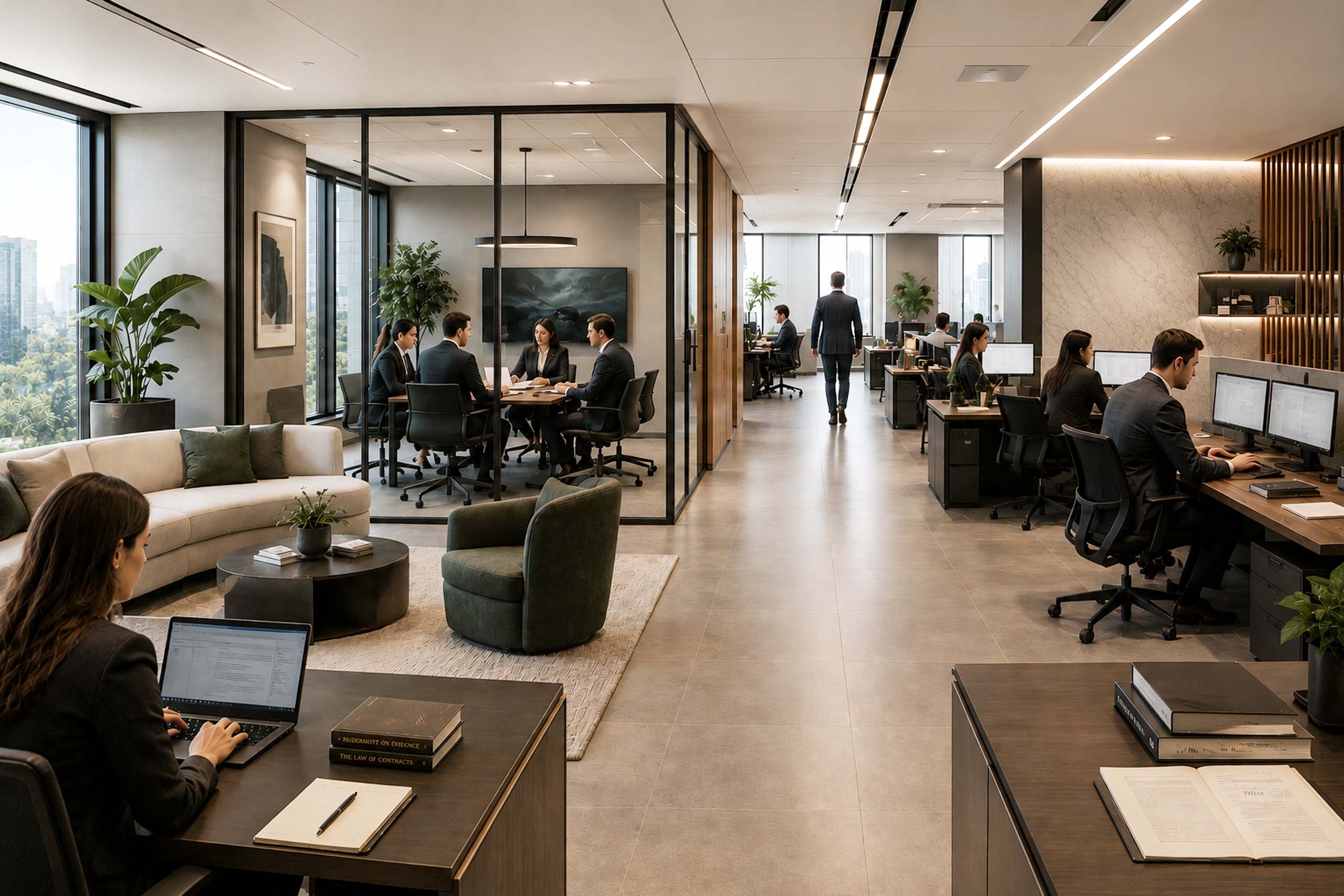
Firms are taking roughly 20% less space per lawyer and signing bigger leases anyway. A decade ago the average firm gave back 25% of its space at renewal. Now they're expanding, and the growth isn't going into private offices and desks. It's going into war rooms for mock trials, collaboration space, conference rooms big enough for client dinners, and hospitality-grade amenities that eat up to a fifth of the new floor plans. Gyms, pools, parking for the partners (some things never change).
Our portfolio data shows the same trade happening well beyond legal. Desk bookings more than doubled from February to June as on-demand seats replace assigned ones. Quiet space reservations rose nearly 20% over the same stretch, and sleep pod bookings held steady month after month, which tells you focus and recovery space isn't a gimmick, it's a workload tool. Weekday building entries grew more than 20% from February to June. And the growth isn't where you'd expect: Monday entries are up more than 80% since February, the fastest-growing day in the building, while Fridays fell double digits.
People are coming in more, booking more, and using buildings completely differently than the 2019 floor plan assumed.
Pourquoi c'est important
Leesman's research explains why the law firm program looks the way it does. Across more than a million workplace responses, 92% of employees rate individual focused work as important, the highest of any workplace activity. And only about a third are satisfied with noise levels in their office. That gap, the most important activity being the worst supported one, is exactly what law firms are spending against. The war room and the quiet room are the same purchase: enclosed, bookable space where the work actually gets done.
Law firms have always been the most office-centric industry, and now they're flush. Profits grew 13% last year, lawyer hours grew 3.9%, and AI is generating demand on both sides of the business: AI cases to litigate, AI systems to staff and manage. AI-skills job postings at law firms are up seven times since 2022. The sector that was supposed to be automated out of office demand is leasing because of AI, not despite it.
Que faire ?
If you're an asset manager, underwrite like a law firm CFO. They didn't ask how many desks they need. They asked what the space needs to do, and cut everything that didn't answer. Less area per person, more capability per square foot.
And stop treating amenity space as a giveaway line in the pro forma. For the busiest tenants in the market, it's a fifth of the program and a stated talent weapon. Firms are competing for AI and compliance attorneys with buildings, and they're winning with them.
The office isn't recovering back to 2019. It's being re-specced by the tenants with the most money and the clearest requirements. Law firms just published the spec: fewer desks, more rooms with a job.
The lease got smaller per person and bigger in total. That's not a contradiction. That's the new demand curve.