
The Recovery Is Real. It’s Just Not Evenly Distributed.
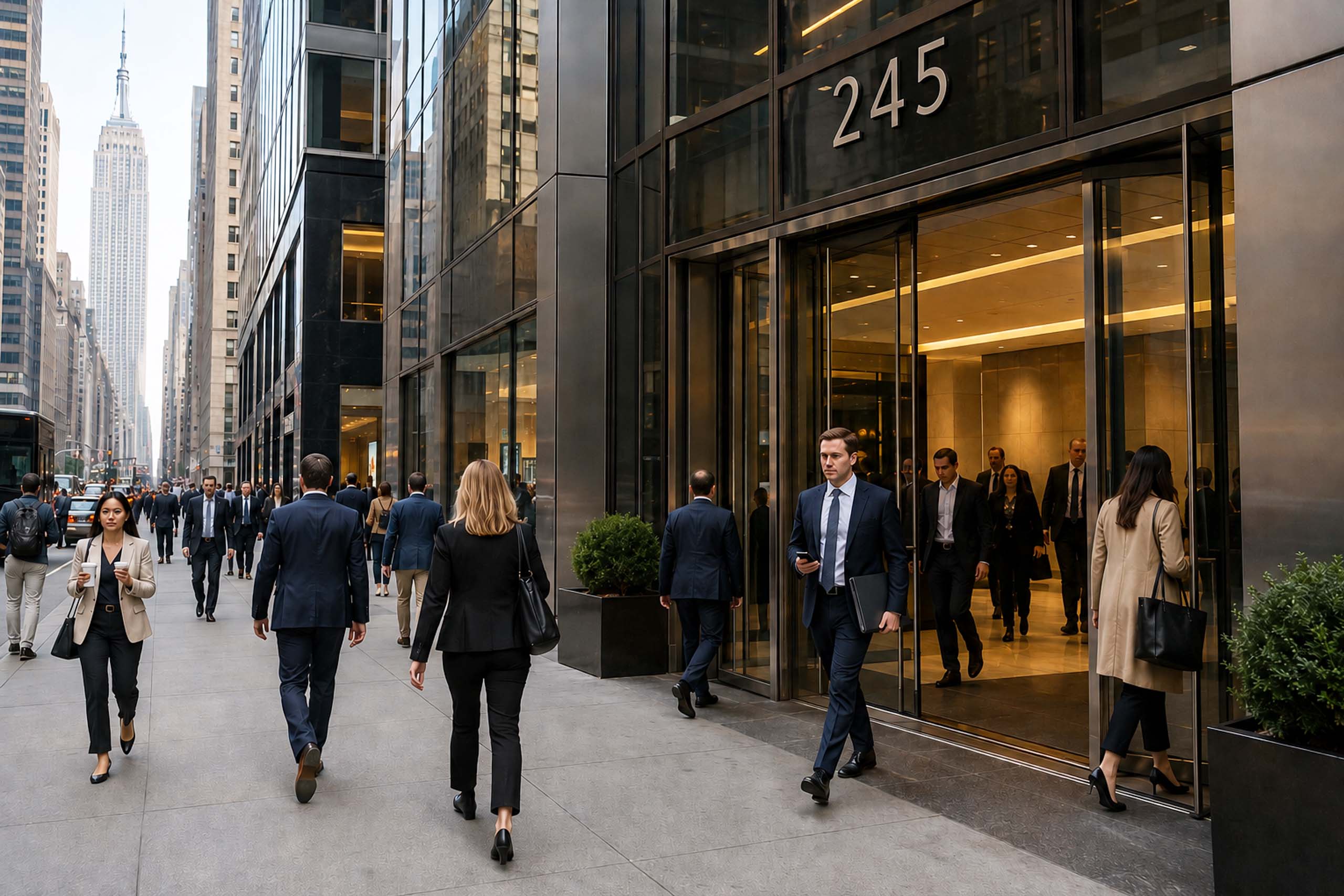

New York's office market is having its best year since the pandemic. Vacancies are tightening, sublease space is shrinking, rents are inching up, and return-to-office is running ahead of every other major U.S. city. Bloomberg, Jane Street, Guggenheim, and Amazon all signed long-term renewals or expansions. Propmodo's 2026 outlook this week called it a market that's found its footing.
Then it added the part nobody wants on the cover. The recovery is uneven and fragile. Manhattan is still dotted with stalled towers, frozen financing, and anchor tenants that never showed. Two World Trade Center is still unfinished. The headline says strength. The footnotes say fault lines.
Here's the thing about fault lines. They don't run between cities. They run between buildings. Sometimes on the same block.
What's Actually Happening
We can see the fault line in our own portfolio data, and it's sharper than any market-level number.
Look at visitor traffic over the last 30 days compared to the prior 30. One property's registered visitors grew more than 13%. Two others in the same portfolio fell. One down more than 11%, one down more than 20%. Same month. Same macro story. Three completely different outcomes.
Visitor traffic is one of the most honest signals a building gives off. It's clients showing up for meetings. It's recruits coming in for interviews. It's events, partners, the people a tenant brings to a building because the building is worth bringing them to. When visitor counts climb, the building is a destination. When they fall, the tenant is quietly running the lease down.
Then there's when people show up. Across the portfolio, after-hours door unlocks, early mornings, evenings, weekends, grew nearly 15% in the last 30 days. Business-hours unlocks grew about 6%. After-hours use is growing more than twice as fast as the nine-to-five.
That's not a building people are occupying. That's a building people are living in.
Why It Matters
The market-level story keeps getting told as one number. Vacancy down. Attendance up. Rents inching higher. Those averages hide the only thing that matters to an individual owner: which side of the split is your building on.
Leesman has measured this from the employee side for over a decade, across more than a million workplace responses. The average office scores 69.5 on the Leesman Index. The average home scores 79.5. That 10-point gap is the reason aggregate recovery numbers lie. Buildings that closed the gap are pulling demand toward them. Buildings that didn't are holding vacancy no matter what the city's numbers say.
Leesman+ buildings, the top performers, narrow the activities where home beats the office from 10 down to 4. They don't do it with a mandate. They do it with infrastructure people actually want to show up for. That's the building where visitors climb and people come back on a Saturday.
What to Do
If you own or operate buildings, stop reading the market report as if it's about you. New York can outperform the country and your specific asset can still be on the wrong side of the fault line. The city's average won't refinance your loan.
Read your own behavioral data instead. Two numbers tell you more than any occupancy percentage. Is your visitor traffic growing or shrinking? And are people using the building outside of nine-to-five, or only badging through it on a Tuesday because they have to?
A building with rising visitors and growing after-hours use has proof of life. A building flat on both is occupied on paper and exposed everywhere else. The occupancy report won't show you the difference. The behavioral data will.
Anyways. The recovery is real. It's just that "the market is back" and "your building is back" are two different sentences. The averages won't tell you which one you're in. Your own data will.