
The Skills AI Can’t Replace Are Exactly What Your Building Needs to Provide

Graduation unemployment for 22-to-27-year-olds just hit its highest rate since the Global Financial Crisis. Not a great time to be entering the workforce. That's the backdrop against which senior CRE executives told a room full of NYU real estate students this week: the way to stand out isn't specialization. It's knowing how to use AI and spending serious time in person, because one teaches you what the other can't.
That's a very specific claim about what offices are actually supposed to do. Not: generate collaboration (which could mean anything). Not: build culture in a vague sense. The explicit claim from a senior managing director at Affinius Capital, speaking at Bisnow's development conference: time in the office ensures new hires "develop skills that AI can't replace."
I've heard a lot of ways to make the case for the office. That one cuts straight to it.
The question for CRE is whether buildings are actually set up to deliver it.
What the booking data shows
If developing judgment through proximity to more experienced people is the new job of the office, the buildings most likely to win aren't the ones with the most amenities. They're the ones where informal learning and mentorship happen naturally.
Our platform data from the last 30 days says something about this. Game room usage is down nearly 30% compared to the prior period. Small conference room bookings are up. Outdoor spaces and roof decks are seeing their highest utilization since we started tracking. Not because it's a new amenity. Because people are gravitating toward the spaces where casual human connection actually happens.
Game rooms were the office amenity darling of 2018. They signaled a company cared about its people. Today, they appear to be exactly what they were always at risk of becoming: entertainment that doesn't convert into the thing companies actually need from in-person time.
The outdoor surge tells you something specific about where June office demand comes from. Summer is the moment when home's backyard competes most directly with the office. Buildings with activated outdoor and rooftop space are winning that competition. Buildings without it are explaining why their occupancy numbers look good on paper but feel flat.
What Leesman confirms
The activities that offices perform best are precisely the ones AI is weakest at: informal social interaction, spontaneous collaboration, being physically present with people who have context you don't. The Leesman Index shows a 10-point gap between how well home supports individual, focused work (score: 79.5) versus how well offices do it (69.5). Offices lose on focus. They're supposed to win somewhere else.
That somewhere else is mentorship, observation, informal exchange. The things that compound over years, not hours. The things that, as the Affinius Capital exec put it, can't be replicated by running an AI tool through a spreadsheet.
The buildings already showing this in their utilization know it. Small rooms. Outdoor terraces. Informal social areas. The quiet corners where a junior person has a conversation with a senior person that changes how they think about something. Those aren't hard to build. They're just not the things most landlords have been measuring.
What to actually check
If you're a landlord or a corporate real estate lead, audit what your space is actually built for.
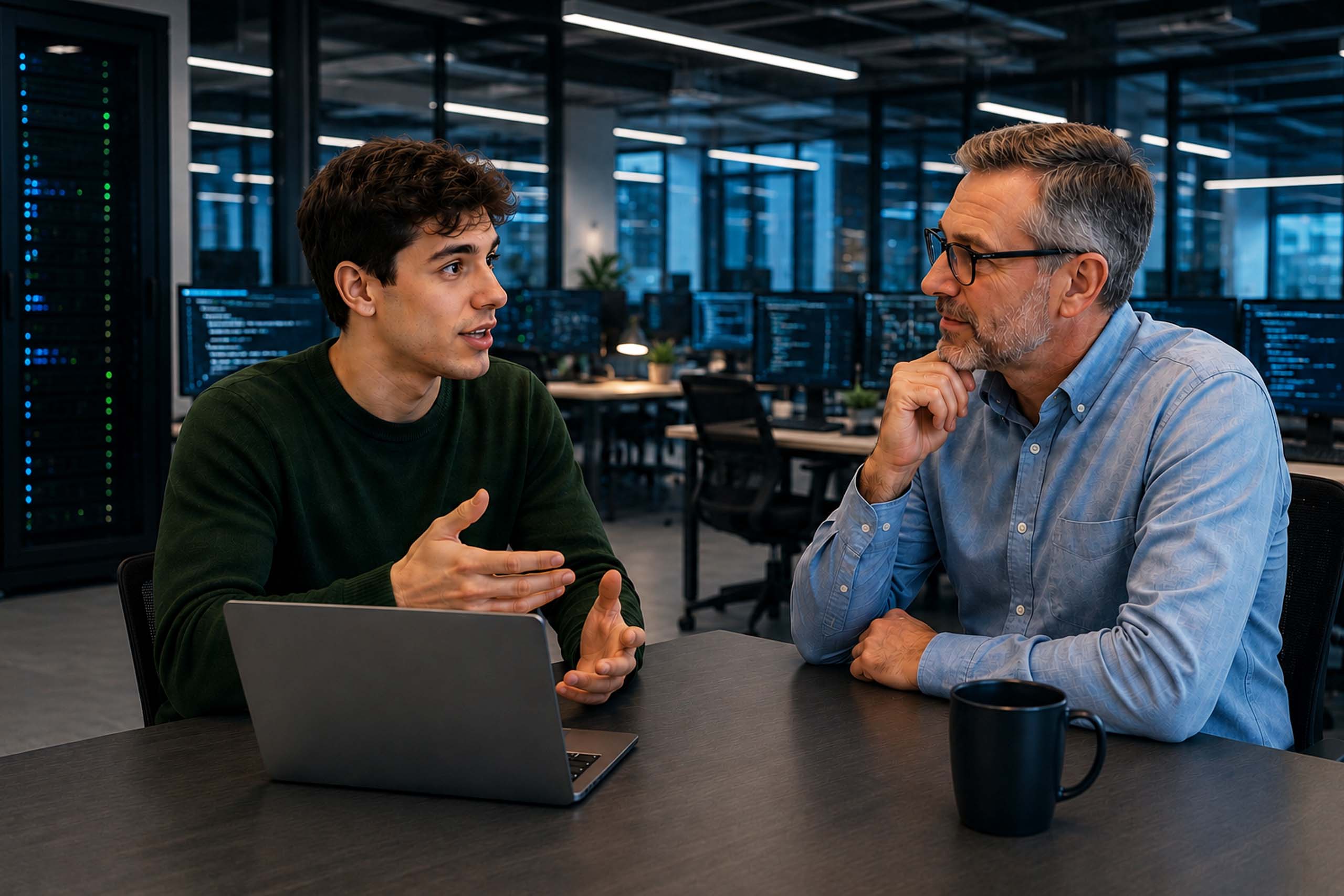
Not: do you have game rooms? But: do you have the kind of space where a 23-year-old and a 53-year-old would naturally find themselves talking?
It doesn't need to be designed. Leesman+ buildings, the top performers in the benchmark, score higher on informal social interaction, score higher on spontaneous collaboration, and narrow the gap between what offices do well and what home does well. The activities that shift are the ones that can't be replicated asynchronously.
Building for mentorship isn't a soft priority. In a job market where AI has compressed the value of commodity analytical work and raised the value of judgment that only comes from experience, the office that accelerates that accumulation is worth more. Higher occupancy. Stronger retention. Better rent.
AI didn't make the office less important. It made it more important, but for specific things. The buildings that understand what those things are will sign tenants. The ones still renovating their game room won't.