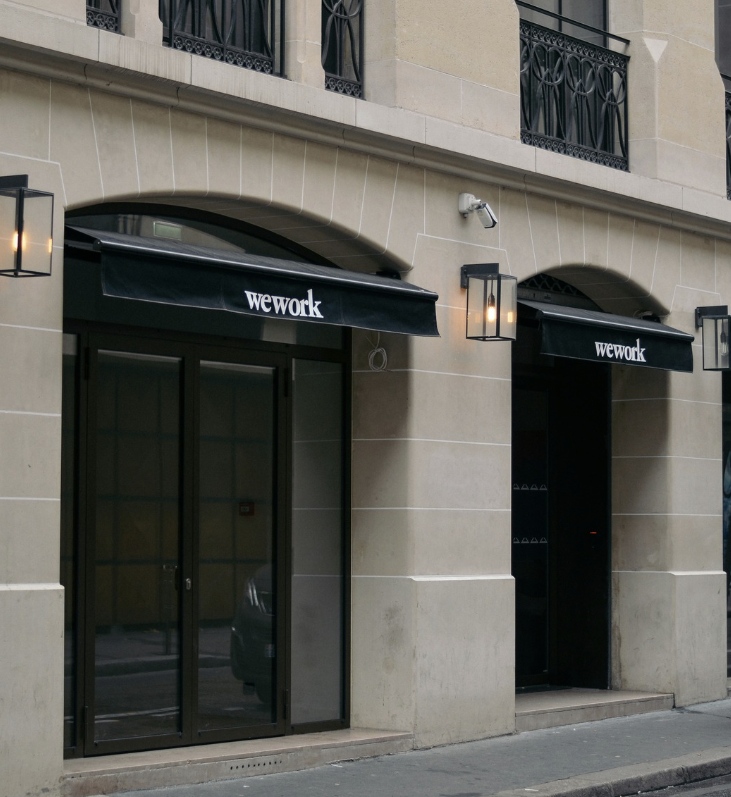

WeWork locations are running 88 to 92% occupancy. The company that became a business school case study in how to vaporize $40 billion is now fuller than most of the Class A towers that outlived it.
Propmodo told the story this week: post-bankruptcy WeWork is 70% corporate clients, growing a managed office business, and expanding only in markets where it’s already winning. (Ten years and one documentary later, the model works. Timing is everything, folks.) But the interesting part isn’t what WeWork fixed. It’s what the market broke.
WHAT’S ACTUALLY HAPPENING
Flight to quality did something nobody priced in: it created a shortage. Tenants crowded into the newest, best buildings while nobody built new ones. National office completions are projected to fall to roughly five million square feet by 2027, a fraction of the historical average. So the good space is scarce, and the conventional route to occupying it, sign a lease and then build out for six months to a year, is too slow for how companies actually operate now.
WeWork’s pitch is 90 days. “We are able to build offices in around 90 days, much faster than people can do it themselves,” their head of account sales told Propmodo. And their fastest-growing client type is the one that can’t predict its own headcount: “An AI company will have a business address one week and a 30-person office the next.”
Here’s the part I keep coming back to. Our portfolio data shows the same behavior inside buildings, at a much smaller scale. In January, the average resource booking across our portfolio was made more than five weeks ahead of the reservation. By June it was under two and a half weeks. Booking volumes held steady the whole time. Demand didn’t drop. The horizon did. Tenants are deciding closer and closer to the moment of use, whether the unit is a conference room next Tuesday or a 40-person office next quarter.
Leesman’s leadership research explains why. 97% of senior CRE leaders now run hybrid models, but only about three in ten are confident they’ve landed on the right approach. Finance mandates, tech doesn’t, and both report the same confidence number. When leadership isn’t sure what the workplace should look like next year, no one commits to what it should look like in year seven.
WHY IT MATTERS
The ten-year lease priced a ten-year future. Underwriting, TI packages, brokerage economics, all of it assumes tenants can see far enough ahead to commit. That assumption is gone, and it’s not coming back with a rate cut. The companies driving demand right now, AI firms most of all, can’t tell you their headcount in six months. Asking them for a decade is asking them to lie.
That’s why the market came to WeWork instead of the other way around. Speed and reversibility went from perks to the product.
WHAT TO DO
Measure your own lead times. How far ahead do tenants book your spaces, tour your floors, start your renewal conversations? That number is a leading indicator of how your tenants see their own future. Ours moved more than 50% in six months.
Build for the short horizon. Pre-built suites, spec floors ready in weeks, space bookable by the hour. Every day you cut between “signed” and “occupied” is rent you win from someone slower.
And stop treating flex as the discount aisle. WeWork’s occupancy says tenants will pay a premium for the right to change their mind. Sell them that before a flex operator sells it inside your own building.
WeWork didn’t out-innovate anyone this time. It just stopped asking tenants to believe in a future nobody can see.
The ten-year lease priced a ten-year future. Nobody’s underwriting one anymore.