


Most landlords think they know their ideal tenant. Tech companies. Law firms. Creative agencies. But knowing an industry sector isn't the same as understanding fit.
An Ideal Tenant Profile isn't a wish list. It's an evidence-based archetype that predicts which tenants will thrive in your portfolio, renew early, and justify premium pricing. The difference between chasing "any tenant" and targeting the right ones determines whether you're building stable cash flows or riding a churn treadmill.
According to the HqO REX Platform Strategy Resource Library, an ITP goes beyond simple creditworthiness or square footage requirements. It's a multidimensional framework: sector alignment, business model fit, space utilization patterns (hybrid vs. dedicated), amenity expectations, growth trajectory, renewal likelihood, and cultural alignment with your platform's brand. In other words, it's the operating manual for who belongs in your buildings.
Why CRM is the Foundation
Here's the paradox: most landlords collect tenant data, but few can actually use it strategically. Contact lists live in spreadsheets. Engagement metrics sit in disconnected platforms. Service requests are lost in legacy work order systems.
This is where CRM for CRE becomes non-negotiable. HqO's unified platform consolidates every tenant interaction into a single source of truth: lease history, engagement patterns, amenity usage, communication preferences, service requests, even credit allocations. When your CRM captures the full relationship, ITPs stop being theoretical exercises and become operational intelligence.
Asset managers who consolidate onto purpose-built CRM platforms gain portfolio-wide visibility that fragmented tools can't deliver. They see which tenant types drive the highest engagement, which personas correlate with retention, and where experience investments actually move the needle on renewals.
The Seven Dimensions of Tenant Fit
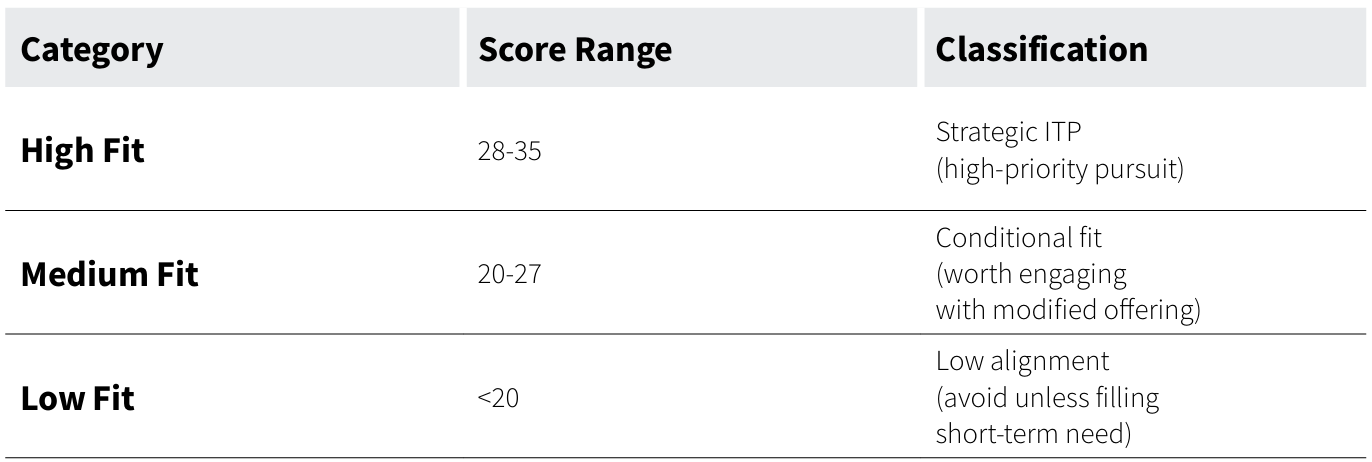
The ITP evaluation matrix scores each prospective tenant across seven dimensions on a 1-5 scale. Total scores determine fit classification: 28-35 (Strategic ITP), 20-27 (Conditional fit), or below 20 (Low alignment).
- Sector/Sub-Sector Fit
Does the tenant align with your strategic industry focus? Use internal leasing data, NAICS codes, and broker reports to score alignment. A fintech company targeting a life sciences campus scores low. A biotech startup in that same campus scores high. - Business Model Compatability
Does their operational model match your platform's service capabilities? Hybrid-heavy companies need flex space and digital engagement tools. R&D operations need lab infrastructure. High client visitation requires hospitality services and seamless visitor management.
- Space Utilization Patterns
Do their layout expectations align with your space typologies? Analyze floor plans, conduct tenant interviews, and review utilization data. Open-plan startups and privacy-focused law firms require different configurations.
- Amenity & Service Preferences
What do they expect beyond the lease? Survey prospective tenants, conduct interviews, gather market intelligence. Map their preferences against your current and planned amenity investments: wellness programming, food and beverage, technology infrastructure, event calendars.
- Growth Trajectory
What's their expansion potential? Review financial filings, funding status, and broker notes. Tenants with strong growth potential justify bespoke service investments and long-term relationship building.
- Renewal Likelihood
How sticky are they? Use historical retention data, relationship health metrics, and sector stability indicators to project tenure. Tenants with high renewal likelihood drive stable cash flows and pricing power.
- Cultural/Brand Fit
Do they share your platform's values? Analyze marketing materials, ESG reports, and employee reviews. Tenants aligned with your brand ethos strengthen community networks and enhance portfolio positioning.
From Scoring to Strategy
The strongest ITPs aren't academic documents filed away after creation. They're living strategies embedded in your CRM, powering persona-based workflows across the tenant lifecycle.
When your platform tracks which tenant types engage with specific amenities, which communication styles drive conversions, and which services correlate with renewal intent, you're not guessing. You're operating from evidence. Strategic ITPs (scoring 28-35) become high-priority pursuits. Conditional fits (20-27) receive modified offerings tailored to their needs. Low-alignment prospects (below 20) get deprioritized unless filling short-term vacancies.
Landlords who build ITPs on unified CRM platforms don't just fill space. They engineer tenant lifetime value, pricing power, and portfolio resilience.
Ready to Build Your Ideal Tenant Profiles?
Download the ITP Template
Start building evidence-based tenant profiles with scoring frameworks today.
Take the Experience Assessment
See how your portfolio compares to experience-led assets.