
Knowledge Towns, AI Infrastructure, and the Decentralized City


Episode 24 of The Quantum City Show went somewhere most CRE podcasts don't: the gap between where capital is flowing and where people actually want to live.
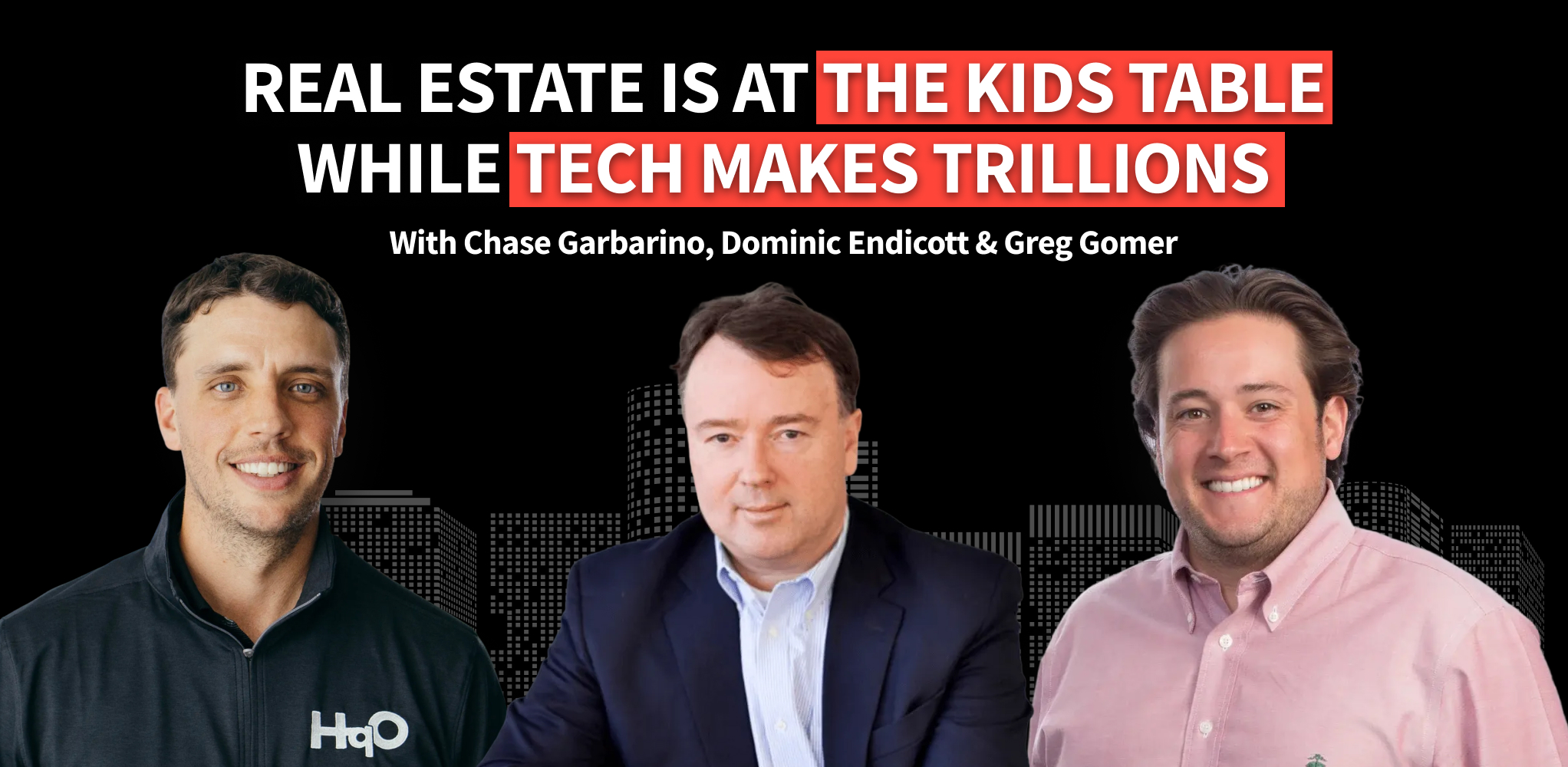
Chase Garbarino and Greg Gomer welcomed Dominic Endicott, co-author of Knowledge Towns, director of Northstar Ventures, and co-founder of Forge Ventures, for a conversation that reframed some of the biggest questions facing commercial real estate, urban planning, and the future of innovation ecosystems.
Here are the ideas that stayed with us.
Knowledge Towns vs Smart Cities: Start With People, Not Technology
The smartest observation of the episode came early. When Dominic was asked how a knowledge town differs from a smart city, his answer was direct: smart cities start with technology and work outward. Knowledge towns start with people and work backwards.
That reframe matters for everyone building or managing commercial real estate. The question isn't what technology can you install in a building. It's what do the people inside it need, and how do you design the environment to deliver it? Digital infrastructure is only as valuable as the human outcomes it enables.
Burlington, Vermont was Dominic's flagship example: a university anchor, a co-working hub on the lake that became the nerve center for Vermont's startup ecosystem, and a venture fund that attracted $200 million in seed capital followed by $800 million in follow-on investment, culminating in a $7 billion IPO. The formula wasn't technology first. It was talent, placemaking, and capital working in sequence.
The Trillion Dollar Question
The episode's most provocative thread was Dominic's analysis of where AI infrastructure capital is flowing. Amazon, Microsoft, Meta, and Alphabet have collectively announced nearly a trillion dollars in AI-related real estate spending. Those data centers aren't going to New York or San Francisco. They're going to distributed nodes in secondary cities.
But here's the counterintuitive insight: data centers and knowledge towns aren't competing for the same geography. Data centers go where power and land are cheap. People go where life is good. The places that will win the next economic cycle are the ones that understand this distinction and position themselves accordingly, attracting the human capital that data center investment alone can't generate.
For CRE operators, the signal is clear. The next wave of tenant demand won't come from the coasts. It'll come from secondary markets that combine natural amenity (lakes, walkability, climate), institutional anchors, and the venture capital ecosystem to turn human capital into economic growth.
Walkability is the Metric That Matters
The episode closed with one of the most memorable answers in the show's run. When asked for the single most important metric for a healthy city, Dominic didn't say GDP growth or vacancy rates. He said walkability and personal connections, and explained that the two are inseparable.
The faster the traffic, the fewer the connections. The research on this is decades old, but the implications for how we design commercial districts and innovation campuses are still underappreciated. The cities and campuses that slow down, that create space for serendipitous human interaction rather than efficient car throughput, are the ones that compound in social and economic value over time.
For anyone building mixed-use districts or planning campus environments, this isn't a planning footnote. It's the design thesis.
Listen and Subscribe
Episode 24 of The Quantum City Show is available now on all major platforms.
The Quantum City Weekly, HqO's newsletter on AI, cities, commercial real estate, and the leaders shaping where and how we live and work, drops every week.