
Singapore: The Blueprint for the Next Quantum City
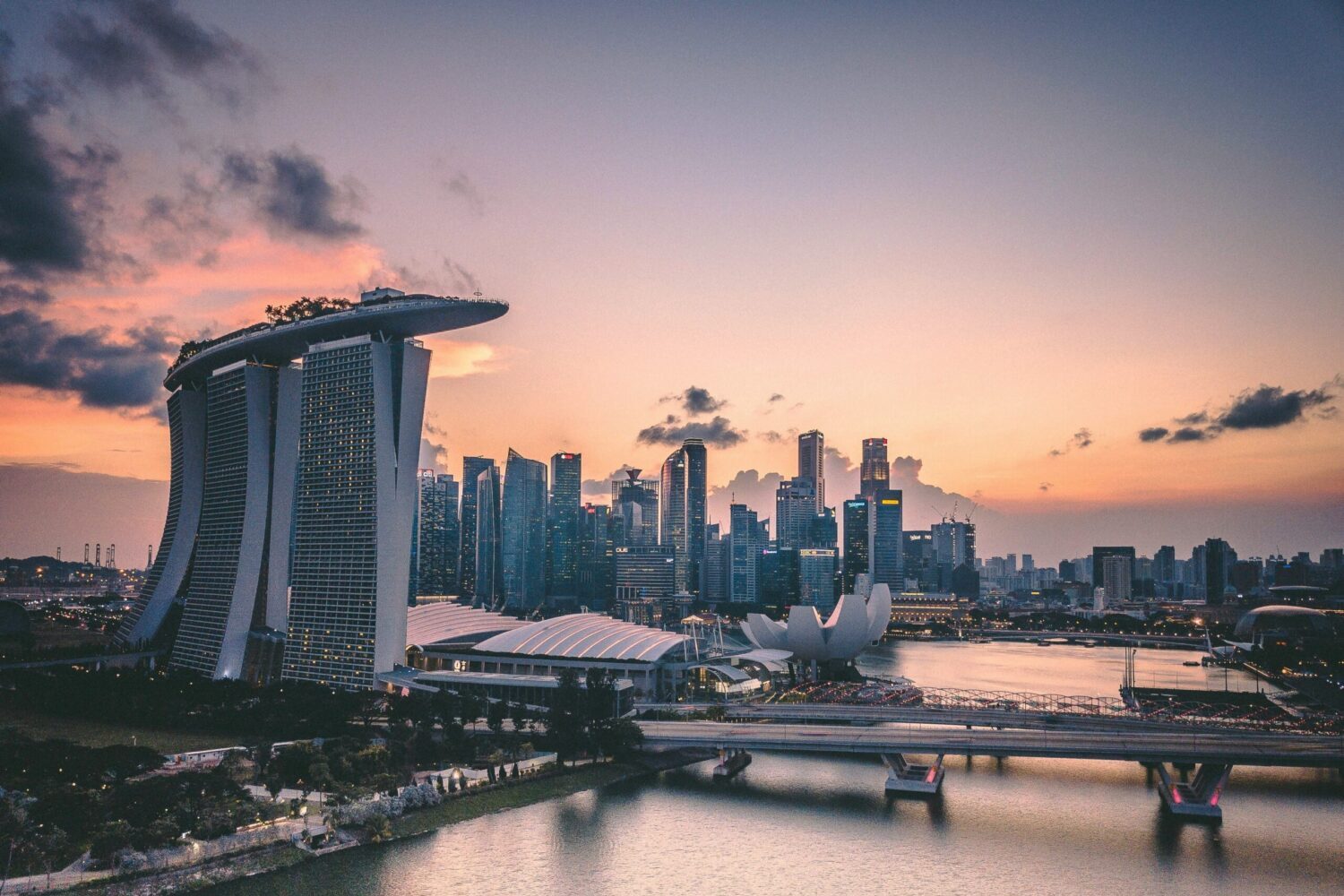

If you want to understand what the Quantum City looks like in practice, stop reading white papers.
If you want to understand what the Quantum City looks like in practice, stop reading white papers.
Go to Singapore.
As Chase and Greg explored in Quantum City Weekly with guest Marwan Aboudib—a city designer who has worked on projects from Shenzhen to Dubai—Singapore demonstrates what happens when cities treat intelligence as operating system rather than upgrade.
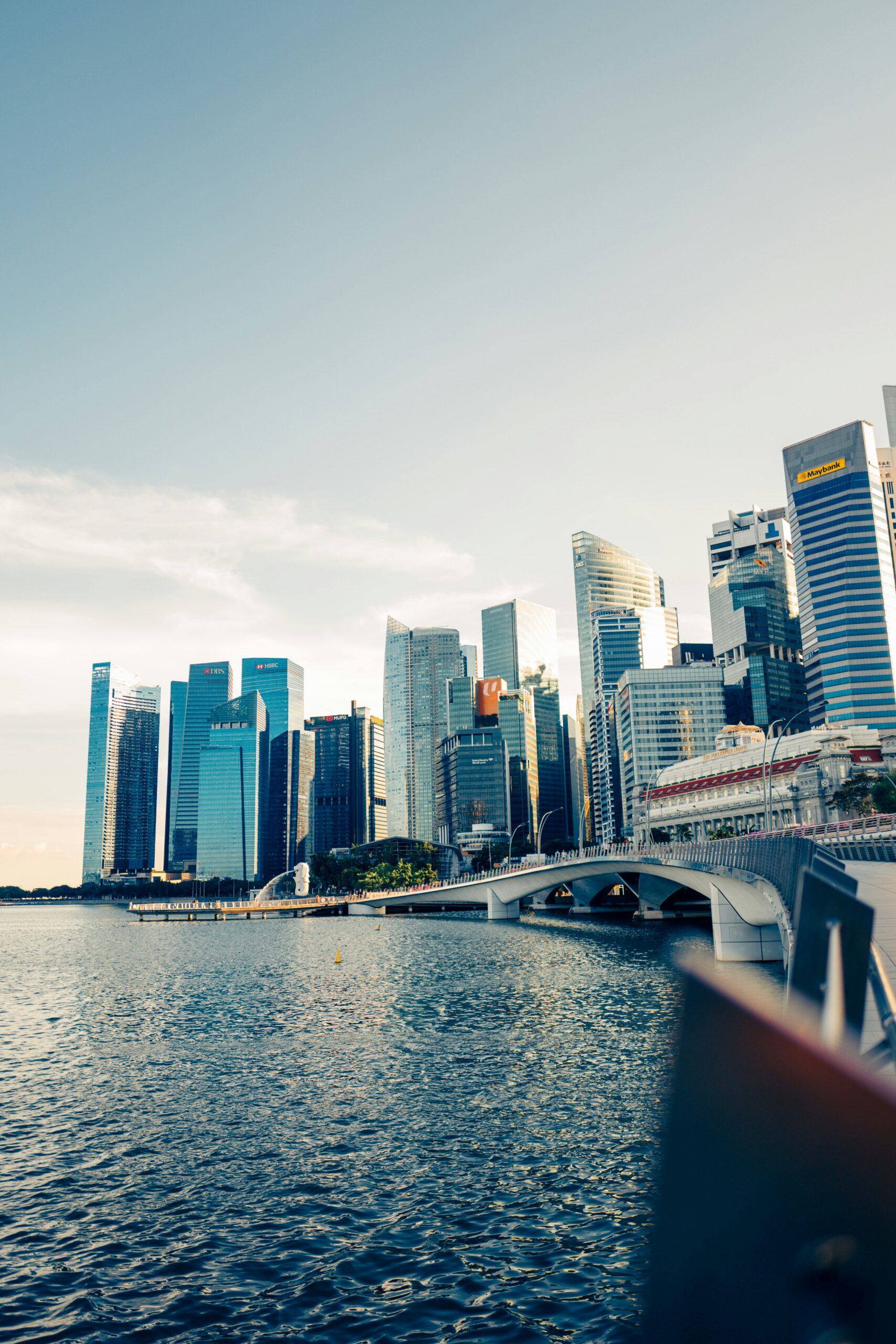
While most cities are still debating smart city pilots, Singapore is operating as a living laboratory for AI-enabled urban infrastructure. The city-state launched its Smart Nation initiative in 2014, aiming to leverage digital innovation across various sectors, and by 2024, relaunched it as Smart Nation 2.0 with a decisive shift toward AI capabilities as the foundation of urban operations.
This isn't incremental improvement. It's systemic transformation.
The Infrastructure of Intelligence
Most smart city initiatives start with the same playbook: install sensors, collect data, generate dashboards. Singapore flipped that equation.
They started with a question: What does a city look like when intelligence is the operating system, not the upgrade?
Singapore's AI market will expand from $1.05 billion in 2024 to $4.64 billion by 2030, representing a 28.10% compound annual growth rate Introl. But these numbers signal something more fundamental than market size. They signal a city rewiring itself around adaptive systems.
The data center landscape tells the infrastructure story. With over 1.4GW of current capacity across 70+ facilities, Singapore maintains the lowest vacancy rate in Asia-Pacific at just 1.4%. That's not overcapacity. That's a city building the substrate for intelligence at scale.
Google has committed $5 billion to Singapore's technical infrastructure, completing major expansions of its data center campus in Jurong West throughout 2024. Microsoft selected Singapore for its 80MW data center pilot program and designated it as a key location within its $80 billion global AI infrastructure investment.
This is what serious AI infrastructure looks like: hyperscalers choosing Singapore as the foundation for regional operations because the city has systematically reduced every friction point in deploying intelligence at scale.
Intelligence as Urban Operating System
Smart cities collect data. Quantum Cities act on it in real time.
The Smart P.U.B. initiative uses thousands of sensors and AI analytics to detect leaks and optimize water distribution, achieving 5% water savings and near-zero pipe bursts. The system doesn't just monitor infrastructure. It predicts failures before they occur and optimizes resource allocation dynamically.
Transportation follows the same pattern. Singapore introduced Electronic Road Pricing (ERP), a smart toll system that adjusts charges based on traffic flow, combined with AI-driven traffic control and integrated public transport apps providing real-time updates.
Buildings are getting smarter too. The HDB has introduced the 'Intelligent Home Management System,' featuring AI-powered solutions for energy management, security, and convenience, with residents controlling their environment through a unified platform that learns behavior patterns.
This is platform thinking applied to cities. Every system talks to every other system. Data flows across domains. Intelligence compounds as the network grows.

AI in Finance: The Quantum City's Economic Engine
If intelligence is infrastructure, finance is where that infrastructure creates economic velocity.
OCBC Bank makes 6 million daily AI-powered decisions, targeting 10 million by 2025. The bank deployed OCBC GPT to all 30,000 employees globally in November 2023, making it one of the first major financial institutions to put generative AI directly into employee workflows.
The Monetary Authority of Singapore isn't just regulating AI in finance. It's accelerating adoption. The PathFin.ai initiative, launched in July 2025, supports collaborative AI knowledge sharing among financial institutions.
This is what policy looks like when governments understand that AI leadership is economic strategy, not technology preference.
The Punggol Digital District: Quantum City at Neighborhood Scale
Theory is easy. Execution at scale is hard. That's why Punggol Digital District matters.
GovTech developed the Open Digital Platform (ODP), a digital infrastructure for the country's first smart district, which acts as a "master language translator", enabling seamless integration and optimisation of various systems within the region.
The Punggol Digital District operates as Singapore's living lab. The ODP is the connective tissue that makes platform thinking work in practice. It allows disparate building management systems, energy grids, transportation networks, and service platforms to communicate and optimize together.
This isn't a pilot project. It's a blueprint for how Quantum Cities operate: unified digital backbone, standardized interfaces, continuous optimization based on real-time data.
Singapore is proving the model works at neighborhood scale before rolling it out city-wide. That's smart systems thinking.
Sustainability Meets Intelligence
Most cities treat sustainability and technology as separate initiatives. Singapore integrated them from the beginning.
New data centers must achieve a power usage effectiveness of 1.3 or lower, with liquid cooling standards mandatory by 2025. The country developed the world's first Tropical Data Centre methodology, which achieves 2-5% energy savings per 1°C temperature increase.
Singapore's approach demonstrates that intelligence and sustainability aren't trade-offs. They're multipliers.
The Talent Infrastructure
Hardware and software are table stakes. Talent is the compounding asset.
AWS commits to training 5,000 individuals annually from 2024 to 2026 through its AI Spring program. Microsoft's Asia AI Odyssey targets 30,000 developers across ASEAN.
The most telling signal: 81% of Singapore businesses plan to increase AI training within the next 6-12 months. When four out of five businesses are investing in AI capability building, that's not a trend. That's an entire economy rewiring itself around intelligence as competitive advantage.
What This Means for Commercial Real Estate
If cities become intelligent platforms, buildings that don't integrate into those platforms become obsolete.
The Quantum City thesis has direct implications for commercial real estate: Buildings need to be nodes in urban intelligence networks, not standalone assets. Experience platforms need to connect to city-scale systems. Data generated by buildings needs to feed back into urban optimization.
Singapore is showing what this looks like in practice. Smart buildings talk to smart grids. Transportation data informs amenity programming. Building management systems integrate with district-scale platforms.
The properties winning in Quantum Cities won't just deliver great tenant experience. They'll be essential infrastructure in urban intelligence networks.
At HqO, we're building for this future. The Quantum City isn't science fiction. It's an operational reality in Singapore and emerging in cities worldwide.
The question isn't whether your buildings will need to operate as intelligent systems. The question is whether you're building that capability now or scrambling to retrofit it later.
Want to understand how the Quantum City reshapes commercial real estate? Download the Quantum City Initiative whitepaper and see what's coming.