
The AI Readiness Checklist: Is Your Building Infrastructure Ready for Intelligent Tenants?
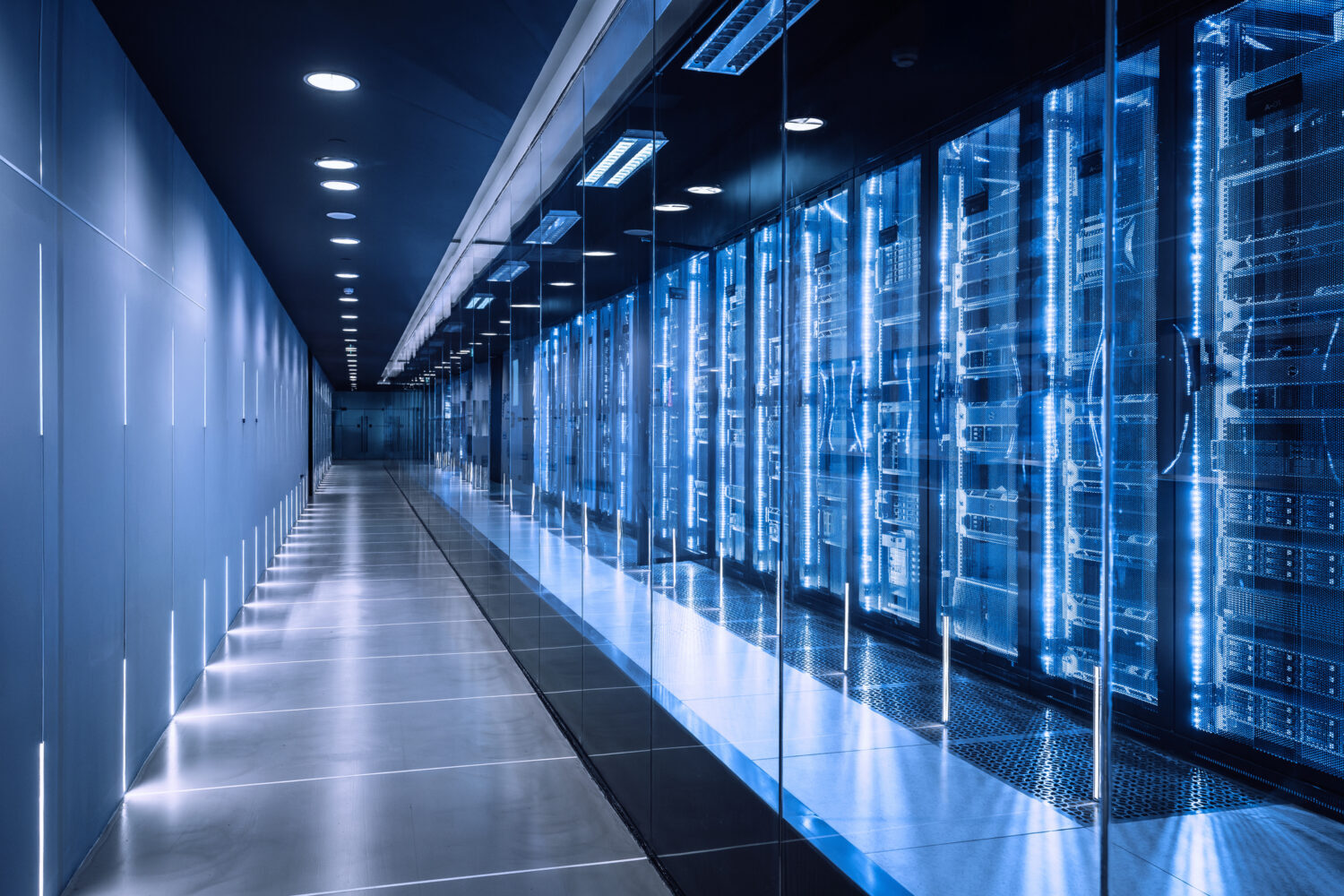

Your next tenant might not be a law firm or a tech startup.
It could be an AI company that needs 10x the power capacity your building was designed to deliver. Or a life sciences firm running computationally intensive research that requires connectivity your infrastructure can't support.
The question facing every portfolio in 2026: Are your buildings ready for tenants whose operational requirements look nothing like what you designed for?
AI isn't changing commercial real estate at the margins. It's rewriting the infrastructure requirements that determine which buildings win enterprise tenants and which become obsolete.
The Infrastructure Gap
Most office buildings were designed for a world where tenants needed desks, conference rooms, and reliable HVAC. Power density? 5-7 watts per square foot was plenty. Connectivity? A few fiber drops and good WiFi coverage handled it.
That world is over.
AI-native companies and enterprises deploying AI workloads need power densities that can reach 50-100 watts per square foot in server rooms and data-intensive spaces. They need redundant connectivity with failover capabilities because downtime isn't an inconvenience—it's millions in lost compute time. They need cooling systems that can handle heat loads legacy HVAC was never designed for.
Buildings without this infrastructure aren't just less competitive. They're functionally obsolete for the fastest-growing tenant segment in commercial real estate.
Five Operational Differences That Matter
1. Power Capacity & Distribution
Current state: Most buildings provide 5-7 watts/sqft with limited capacity for tenant increases.
AI-ready state: Flexible power distribution supporting 20-50+ watts/sqft in high-intensity spaces, with infrastructure allowing tenant-specific upgrades without building-wide electrical work.
Assessment questions:
-
- What's your building's total power capacity and current utilization?
- Can tenants increase their power allocation without major capital work?
- Do you have redundant power systems for mission-critical operations?
2. Cooling & HVAC
Current state: Standard HVAC designed for typical office heat loads (people, computers, lights).
AI-ready state: Cooling systems capable of handling concentrated heat loads from server rooms and compute-intensive equipment, with zoning flexibility for varying tenant needs.
Assessment questions:
-
- What's your maximum cooling capacity per floor or zone?
- Can your system handle localized heat spikes without affecting other tenants?
- Do you have supplemental cooling options for high-density spaces?
3. Connectivity Infrastructure
Current state: Standard fiber connectivity with basic redundancy.
AI-ready state: Multiple diverse fiber paths, carrier-neutral infrastructure, low-latency connectivity options, and bandwidth scalability without physical infrastructure changes.
Assessment questions:
-
- How many diverse fiber providers serve your building?
- What's your maximum available bandwidth per tenant?
- Do you have edge computing or colocation options for latency-sensitive workloads?
4. Physical Security & Access Control
Current state: Standard badge access and security cameras.
AI-ready state: Biometric access controls, AI-powered surveillance with threat detection, secure spaces for proprietary equipment, and compliance-grade access logging.
Assessment questions:
-
- Can you provide secure, isolated spaces for sensitive compute equipment?
- Do your access logs meet SOC 2 or ISO 27001 requirements?
- Can you support tenants with specialized security clearance needs?
5. Space Flexibility & Configuration
Current state: Standard office layouts with fixed infrastructure.
AI-ready state: Modular spaces allowing rapid reconfiguration, raised floors for power and cooling distribution, and structural capacity for heavy equipment.
Assessment questions:
-
- Can tenants reconfigure spaces without major construction?
- What's your floor loading capacity for server racks and equipment?
- Do you have infrastructure pathways that support future technology needs?
6. Sustainability & Energy Management
Current state: Basic energy monitoring with LEED certification.
AI-ready state: Real-time energy monitoring with tenant-level visibility, renewable energy options, carbon tracking, and optimization systems that balance performance with efficiency.
Assessment questions:
-
- Can tenants see their real-time energy consumption and carbon footprint?
- Do you offer renewable energy procurement options?
- How do you optimize for both performance and sustainability?
The Competitive Advantage
Buildings that address these infrastructure requirements don't just attract AI companies. They attract any enterprise deploying AI workloads, which increasingly includes every sector from financial services to healthcare to logistics.
The market is already rewarding AI-ready infrastructure. Data center absorption reached record levels in 2025. Landlords who positioned industrial and office assets for AI-intensive uses captured premium rents. Purpose-built AI infrastructure became a competitive moat that justified rent premiums competitors without it couldn't match.
What Leading Portfolios Are Doing
Forward-thinking asset managers aren't waiting for tenant demand to drive infrastructure upgrades. They're proactively auditing portfolios, identifying buildings with upgrade potential, and making strategic investments in power, cooling, and connectivity before competitors recognize the opportunity.
Some are partnering with colocation providers to add edge computing capabilities without full data center conversions. Others are creating AI-ready zones within buildings, offering premium power and cooling in dedicated spaces while maintaining standard infrastructure elsewhere.
The common thread: They're treating AI infrastructure as tenant acquisition and retention infrastructure, not just capital expense.
Start With Assessment
You don't need to convert every building into a data center. But you need to understand which assets have AI-readiness potential and which will struggle to serve intelligent tenants.
Take the HqO Portfolio Assessment to benchmark your infrastructure against AI-ready standards and identify strategic upgrade opportunities before your competitors do.
The buildings that win the next decade won't just be well-located and beautifully designed. They'll be the ones whose infrastructure enables the work tenants actually need to do.