
The REX Effect: How Jamestown Closed the Experience Gap at Industry City


How a 6 million square foot industrial relic became Brooklyn's most dynamic experience ecosystem
Vision
In 2013, when Jamestown acquired the 6 million square foot Bush Terminal complex in Sunset Park, most investors saw a fading industrial relic. Jamestown saw what Brooklyn's creative economy was missing: a manufacturing-first, experience-led ecosystem where makers, retailers, and innovators could collide at scale.
Over the next decade, Jamestown poured between $400M and $450M into transforming 16 buildings across 35 waterfront acres into what would become Industry City: home to 650+ businesses, a 9,000-person daily campus, and Brooklyn's blueprint for adaptive reuse done right.
But here's what the Industry City success story doesn't tell you: this level of transformation required a decade of patient capital, years of trial and error, and deep local knowledge that's nearly impossible to replicate across a national portfolio without a systematic framework. While Jamestown proved that industrial-to-mixed-use conversions can command premium economics and community loyalty, they built this through custom design and instinct, not repeatable playbooks. The question facing forward-thinking portfolio operators isn't whether experience-driven transformation works—Industry City proves it does—but how to deliver it systematically, measurably, and efficiently at scale.
That's where the REX methodology comes in.

Market & Ideal Tenants
Brooklyn's industrial renaissance has roots that run deep. By 2024, the borough's industrial and warehouse market posted 111 transactions totaling over $1.1 billion, representing year-over-year increases of 28% in deal volume and 59% in dollar volume, according to Ariel Property Advisors' Brooklyn 2024 report. Sunset Park, where Industry City anchors the waterfront, saw 16 industrial sales totaling $135 million in 2024. Warehouses across Brooklyn traded at an average of $488 per square foot in 2024, up from $445 in 2023.
But warehouse pricing is only part of the story. The real market shift was happening in who was buying: creative companies, small-batch manufacturers, food entrepreneurs, and experience-driven retailers who needed industrial bones with modern connectivity.
They didn't want polished Class A towers. They wanted authenticity, flexibility, and a campus where collaboration happened organically.
Industry City's ideal tenants weren't traditional warehouse users. They were makers who needed 20-foot ceilings and loading docks but also wanted café culture and design-forward common spaces. Retailers who valued foot traffic and Instagram-worthy backdrops. Media companies seeking production space steps from creative talent. Food entrepreneurs testing concepts before scaling nationally. The Brooklyn Nets wanted a training facility that would double as a community anchor.
When Industry City opened, the Experience Gap in Brooklyn's industrial market was glaring: buildings offered space but not services, square footage but not systems, leases but not community. Jamestown recognized that closing this gap meant redesigning the entire tenant journey.
Closing the Experience Gap
Jamestown's transformation wasn't cosmetic. It was infrastructural.
Spaces
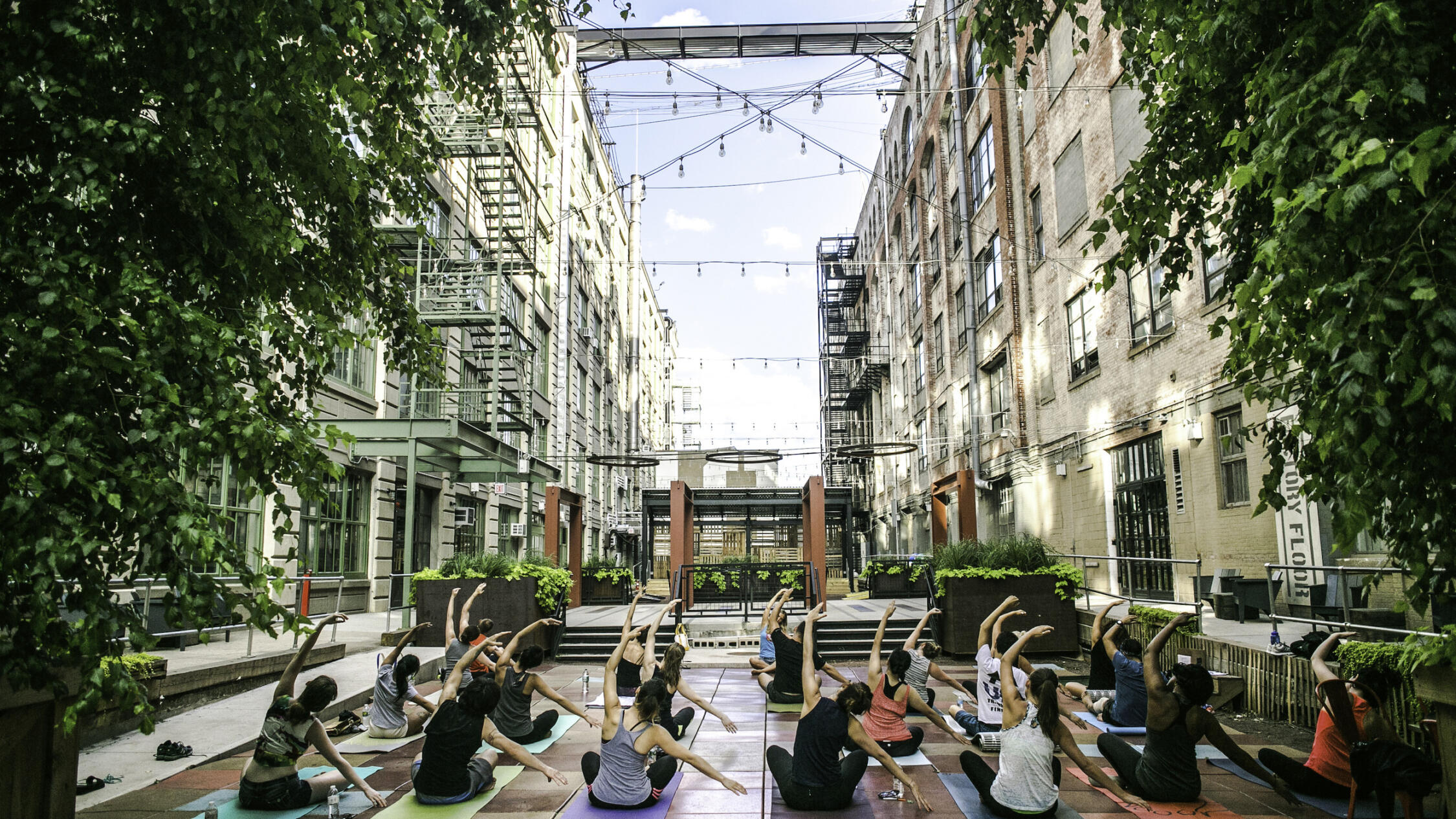
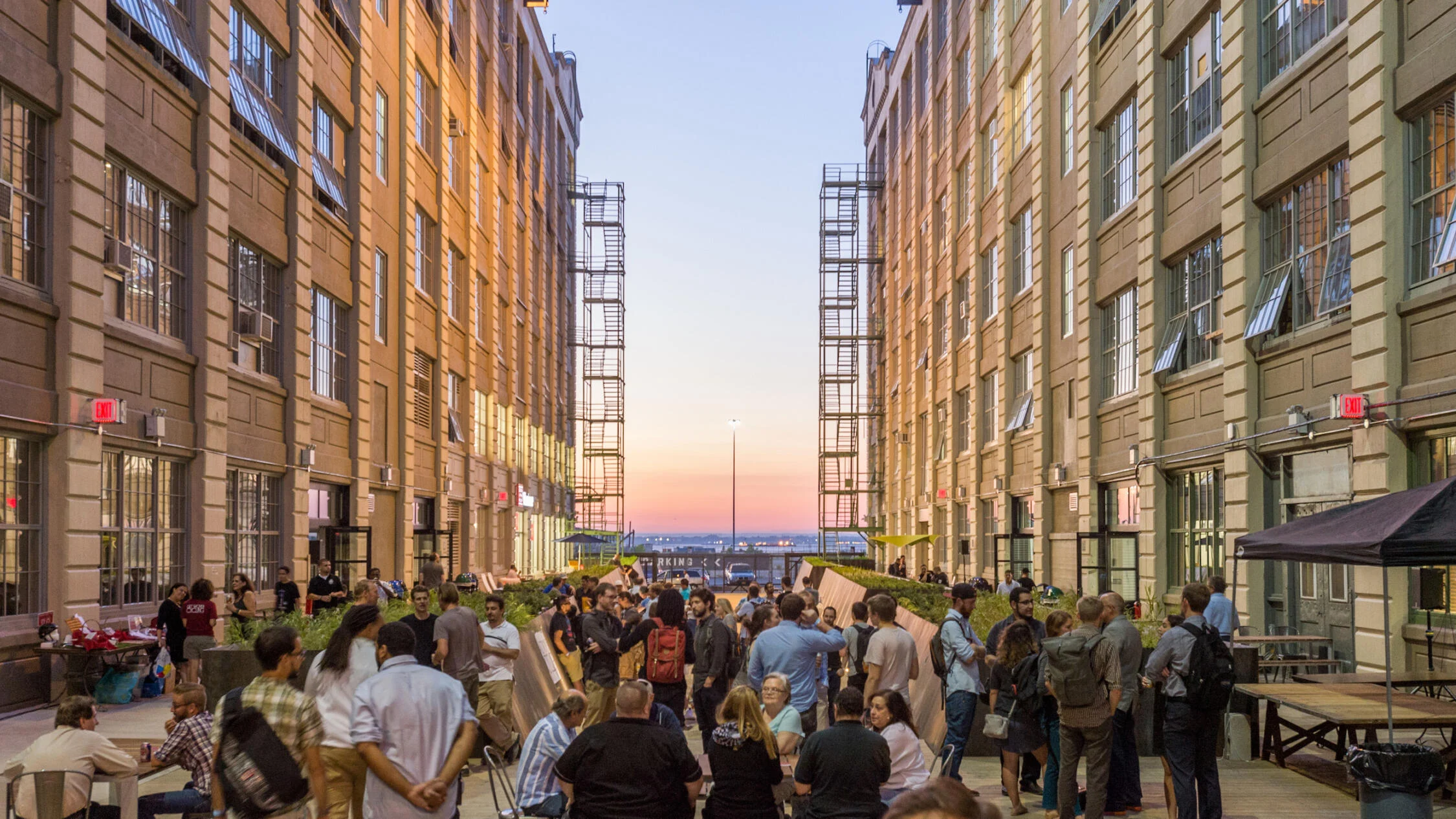
Exposed brick and timber beams stayed. Ground floors became innovation courtyards with curated retail and dining. Rooftops opened for events. The campus became permeable—pedestrians wandered through, not just tenants. LEED Silver certification signaled that sustainability mattered. Major anchors like Brooklyn Nets, Time Inc., MakerBot, West Elm, and NYU validated the model. By 2025, Industry City housed 650+ businesses spanning manufacturing, retail, creative office, and food and beverage.
Services
Industry City curated an ecosystem, not just leases. The Innovation Lab offered prototyping resources and mentorship. Seasonal markets drew tens of thousands, boosting retail sales. Food halls, fitness facilities, and event venues made the campus a 24/7 destination. Jamestown positioned Industry City as Brooklyn's living room—where startups scale, brands test concepts, and community gathers.
Systems
Campus-wide connectivity, wayfinding, tenant apps, parking management, and amenity booking platforms turned operational complexity into seamless experiences. By treating Industry City as a single platform, not 16 disconnected buildings, Jamestown unlocked network effects that traditional industrial landlords couldn't match. Tenants stayed because leaving meant exiting an ecosystem.
The Experience Payoff
The numbers validate the strategy. Industry City's 650+ businesses employ approximately 9,000 people daily, according to the company. Occupancy remained resilient despite cyclical headwinds in Brooklyn's industrial market. Foot traffic from events and retail programming generated ancillary revenue streams beyond base rent.
But perhaps the most telling metric is tenant tenure. Companies that moved into Industry City early, like MakerBot and the Brooklyn Nets, expanded rather than relocated. In a market where tenant churn often signals misalignment, Industry City's retention rates demonstrated something rarer: genuine product-market fit.
The 2020 rezoning proposal, which ultimately faced community opposition and was withdrawn, illustrated both the project's ambition and its complexity. Jamestown's vision for additional housing, office, and retail space reflected confidence in the campus model. The community pushback revealed the delicate balance adaptive reuse projects must strike between growth and neighborhood integration.
Voices of the Experience
What makes Industry City work isn't just the infrastructure. It's what tenants experience daily:
"In terms of the whole experience, it has more oxygen and more life. You have the inner courtyard, and there are a lot of things that allow you to interact with other people; you feel a sense of community. We're taking a plan for growth course, and a lot of businesses are participating. You start comparing notes, and that ability to talk to others is great. I consider myself very fortunate. I get to do my own thing, but at the same time I'm part of a larger transformation."
- Cecilia, Manufacturing Tenant
"For 10 years we were in a stand-alone building on a nondescript street. It's really nice to be part of a community, whether you know other business owners or you just go to lunch and congregate in the same place, you feel like your part of something."
- Anthony, Chocolatier
These aren't platitudes. They're signals that Jamestown understood something fundamental: experience isn't an amenity. It's the product.

Experience Lessons Learned
Industry City proves three things about experience-driven transformation:
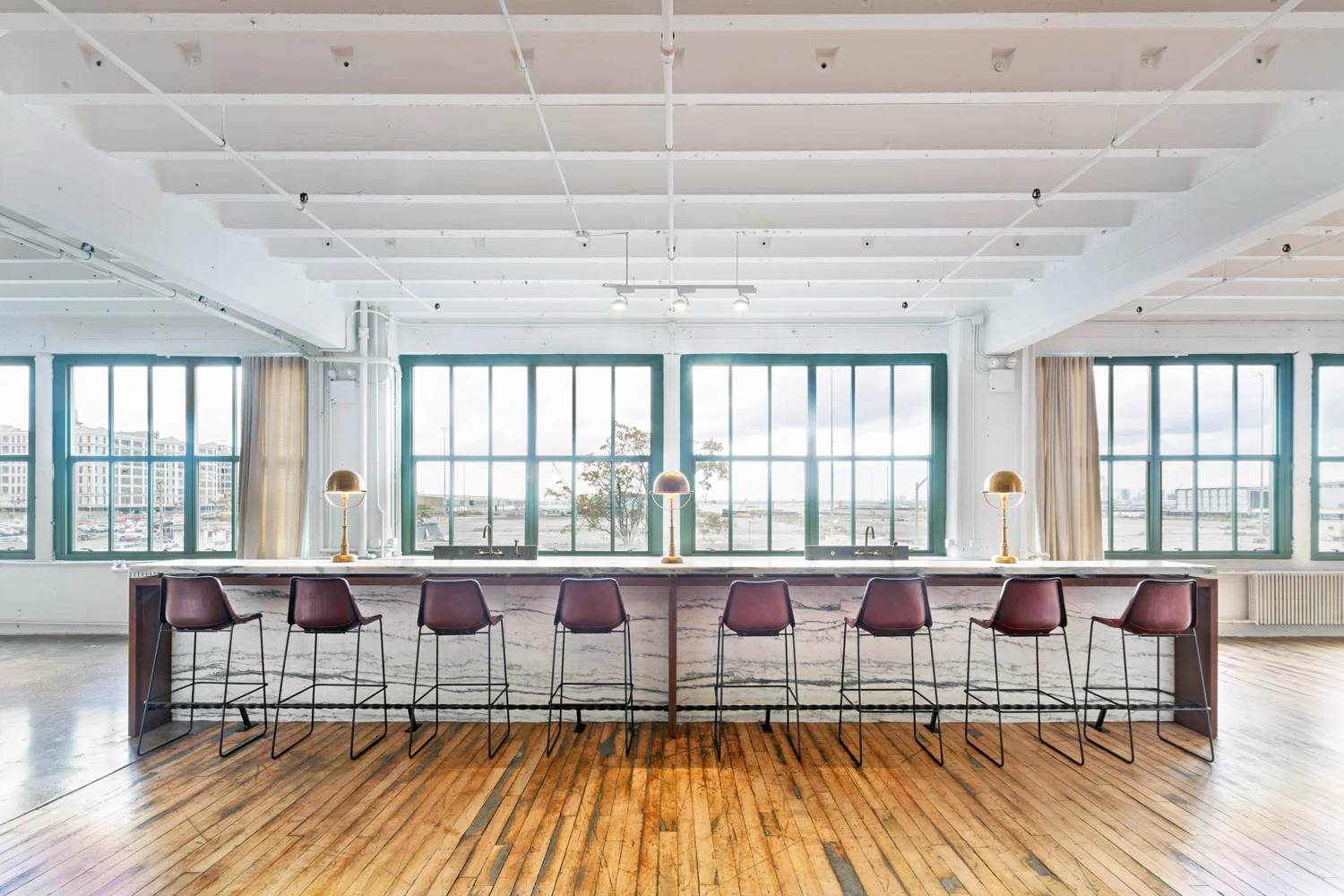
First, heritage matters. Tenants chose Industry City partly because it told a story. Adaptive reuse isn't just sustainable; it's differentiating. The 1890s bones gave the campus authenticity that new construction couldn't replicate.
Second, ecosystems beat buildings. Jamestown didn't optimize individual floor plates. They optimized the entire tenant journey: from lease signing to daily operations to community engagement. That systems thinking is what created stickiness.
Third, scale changes economics. A 6 million square foot campus can absorb programming costs, amenity investments, and community events that a standalone 200,000 SF building cannot. Platform thinking enables experience innovation.
Jamestown got all of this right at Industry City. But they did it through entrepreneurial instinct and years of custom development, not through a repeatable framework they could deploy across their national portfolio tomorrow.
This is the REX Effect: when you systematize how creative businesses collaborate, manufacture, and scale, you don't just fill space—you build the infrastructure that powers the next economy. And you can do it repeatedly, measurably, across entire portfolios.
The REX Advantage
The Industry City transformation proves that experience-driven adaptive reuse works. Jamestown achieved this through entrepreneurial vision, patient capital, and years of custom design. But they built Industry City one decision at a time, without a systematic framework to guide repeatable transformation across their broader portfolio.
Now imagine what becomes possible when you take what Jamestown learned through a decade of trial and error and turn it into a repeatable methodology:
- Playbook-driven efficiency
- Portfolio-level consistency
- Data-driven optimization
Industry City demonstrates what's possible when experience becomes infrastructure. REX provides the system to make it scalable, measurable, and repeatable across entire portfolios—turning pioneering one-off successes into competitive advantage at scale.
The question isn't whether adaptive reuse and experience ecosystems drive performance. Jamestown proved they do. The question is whether you can deliver them at portfolio scale before your competitors do.
Ready to Close Your Experience Gap?
Get the REX Playbook Templates
Includes the Ideal Tenant Profile Builder, Tenant Journey Map, and more.