
The REX Effect: How NB Development Group Built Boston Landing as an Innovation District Blueprint
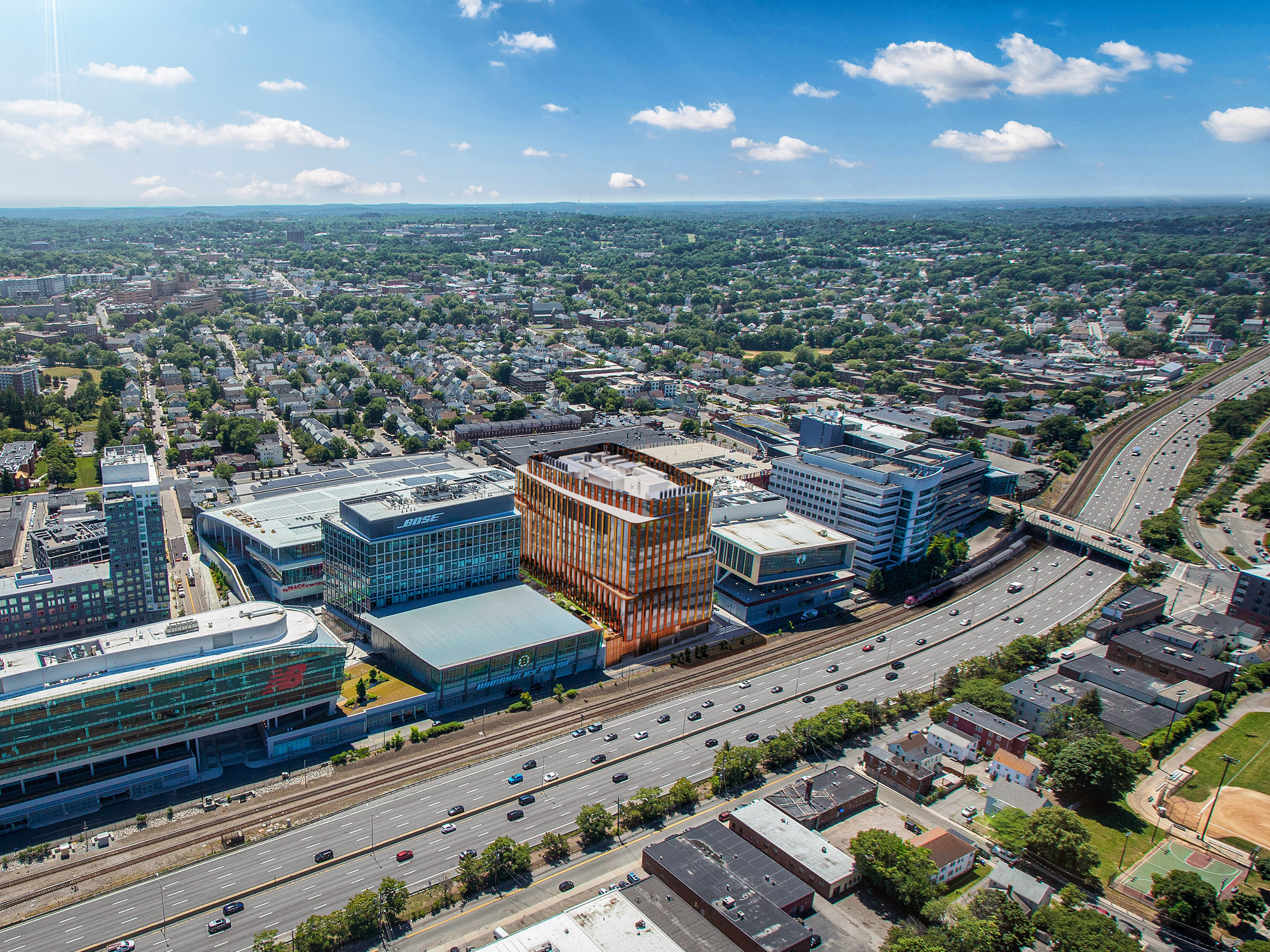

How NB Development Group transformed 15 acres of industrial rail yard into Boston's most distinctive innovation district and what every portfolio operator can learn from it.
Vision
Not every transformation starts with a struggling asset. Sometimes the most instructive case studies begin with a blank canvas and an unusually bold thesis.
In the early 2010s, NB Development Group looked at 15 acres of former industrial stockyard and rail yard in Boston's Brighton neighborhood and saw something specific. Not office. Not retail. Not residential. An innovation district, purpose-built from the ground up, anchored by the institutions and ideas that define a modern knowledge economy.
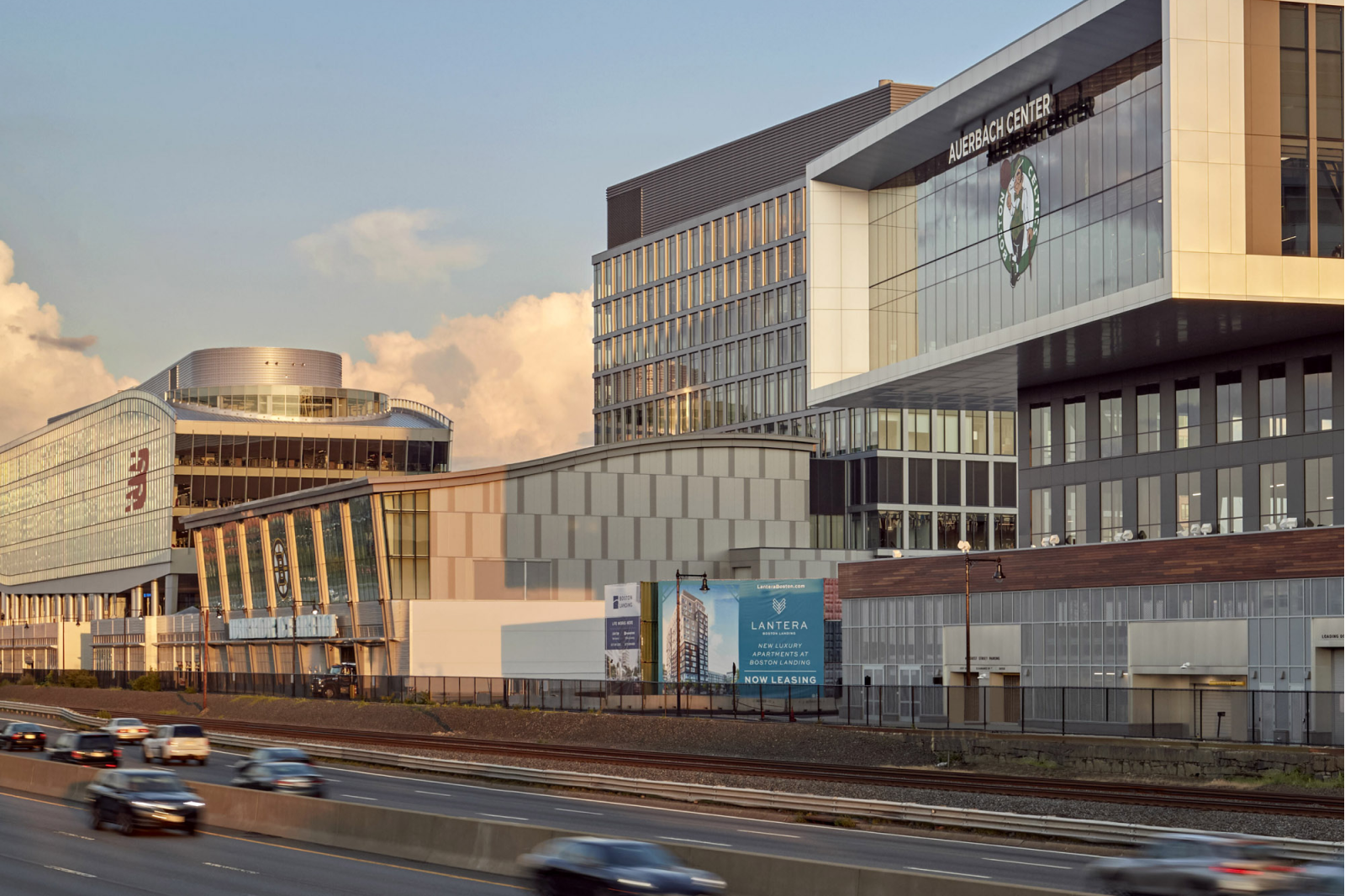
The result is Boston Landing. At 1.9 million square feet across a mixed-use campus, it's one of the most distinctive real estate developments in Boston's recent history. And it's become a blueprint for how mixed-use districts can be designed around experience rather than assembled around vacancy.
What NB Development Group built intuitively, the REX Framework systematizes for portfolio operators everywhere.
The Market Analysis: Flight to Quality Accelerates
Boston's office recovery is real, but it's concentrated. Vacancy declined to 21.2% in the first half of 2025, with nearly 500,000 sq.ft. of net occupancy gains over the prior year, according to JLL. But the tenants signing leases aren't distributing evenly, they're consolidating into a smaller, better slice of the inventory.
CBRE's research makes the divide explicit: since Q1 2020, prime buildings have registered 68.5 million sq.ft. of positive net absorption. Non-prime buildings have posted negative 158.5 million sq.ft. over the same period. The gap isn't narrowing.
Boston Landing was never positioned to compete for traditional Class A tenants. The greater Boston metro had emerged as one of the top two life sciences clusters in the world, with Boston-Cambridge companies securing $7.3 billion in venture capital in 2024 alone. These tenants don't lease space because it's available. They lease space because the environment signals something about who they are and what they're building.
Closing the Experience Gap
Most mixed-use developments layer amenities onto a leasing strategy. NB Development Group did the opposite. They started with the experience they wanted to create and built the real estate around it. That sequencing is the REX methodology in action.
Spaces: Designing for Identity
Every space decision at Boston Landing was made with a specific tenant identity in mind.
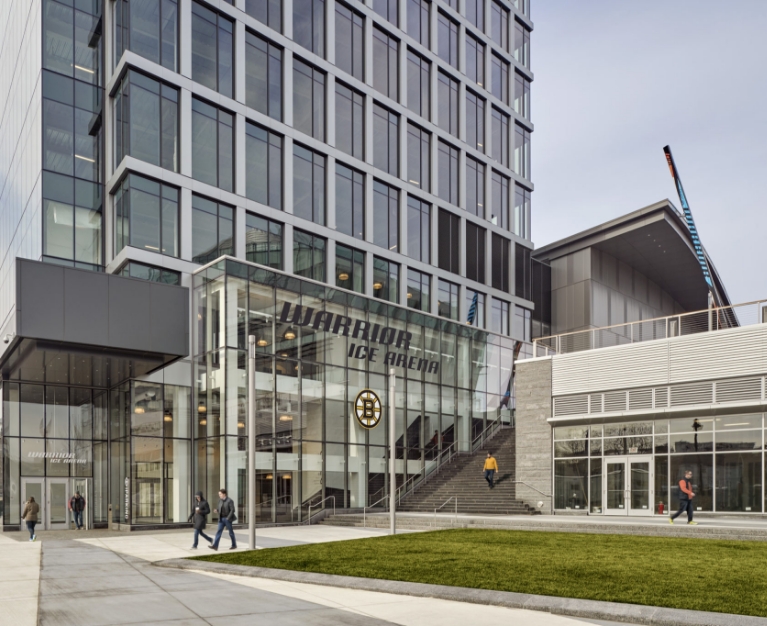
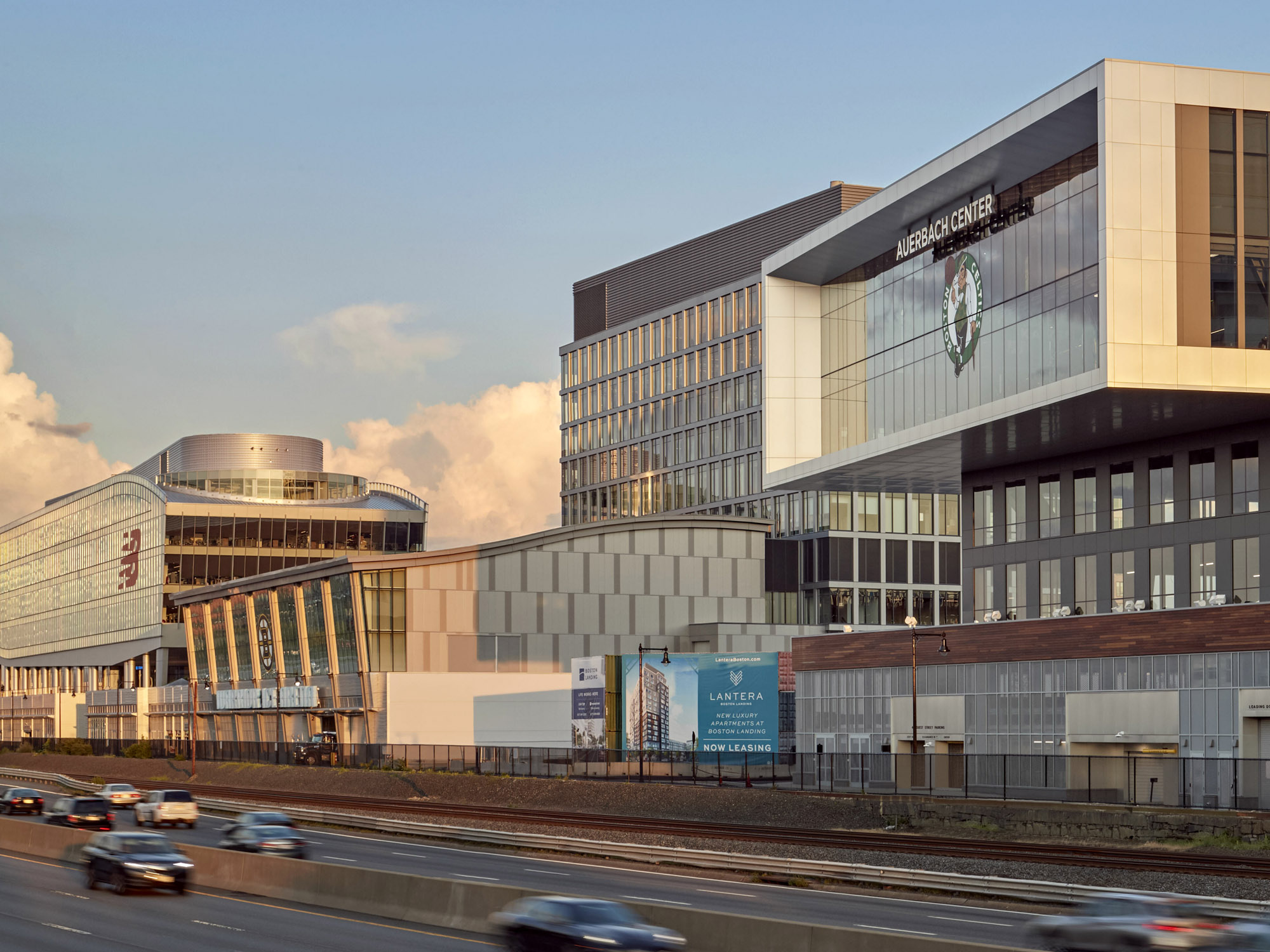
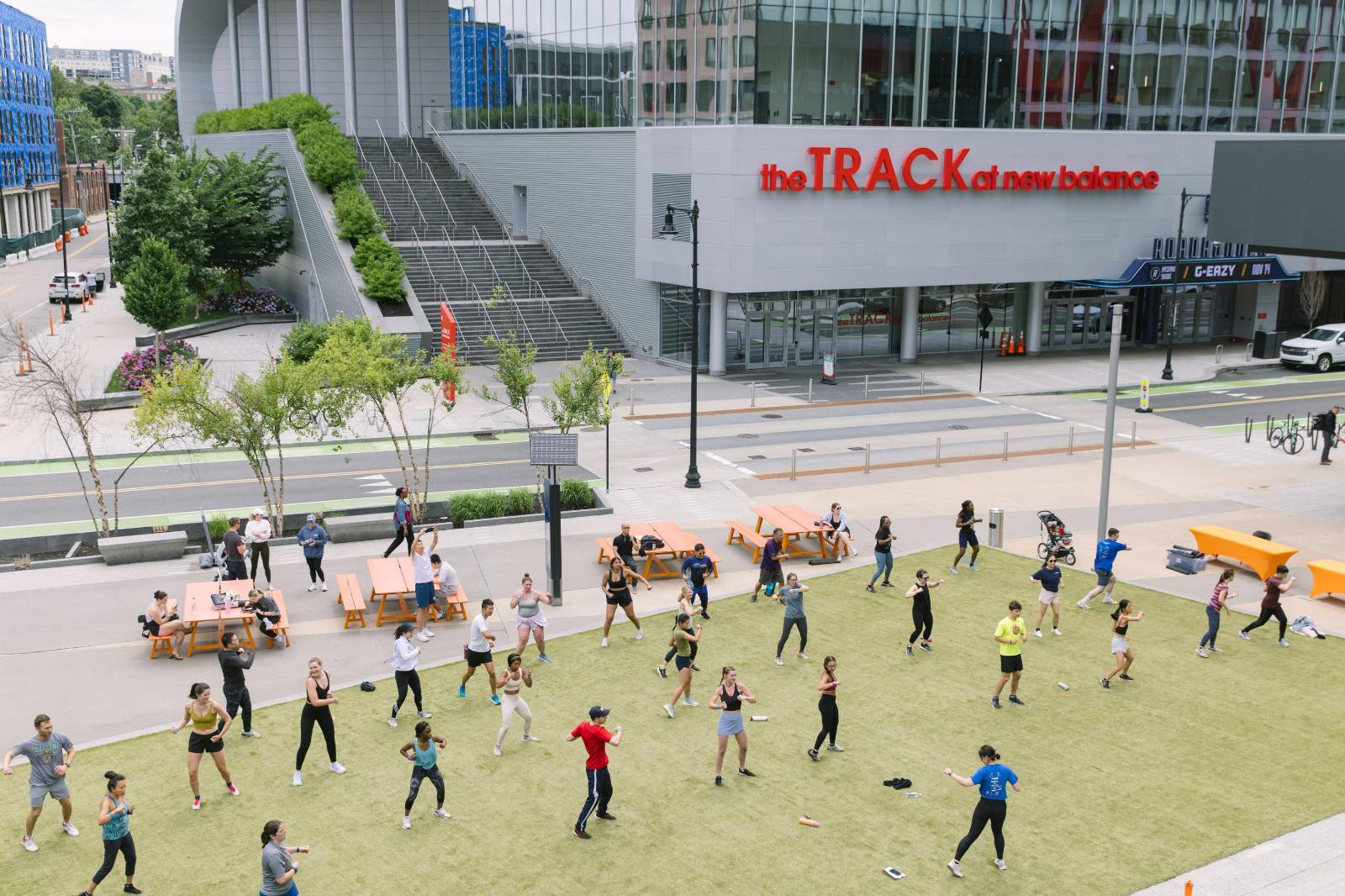
The New Balance World Headquarters isn't just an office building. It's a 250,000 square foot statement about what kind of work happens here. The Auerbach Center and Warrior Ice Arena bring elite athletic performance into daily proximity with the rest of the campus. The TRACK at New Balance, a 290,000 square foot complex with the world's fastest indoor track, a Sports Research Lab, and a 3,500-capacity concert venue, serves athletes, researchers, performers, and the public simultaneously.
These aren't amenities bolted onto a leasing plan. They're the product. In the REX framework, Spaces aren't measured in square footage. They're measured in identity.
Services: Programming the Experience Daily
A district without programming is just real estate. Boston Landing became a destination because the institutions anchoring it create activity that no property management team could script.
The Bruins and Celtics run public programming through their training facilities. Roadrunner, New England's largest indoor general admission venue, brings thousands of people through the district on nights unrelated to the office day. Mass Innovation Labs connects early-stage tech companies to the broader campus ecosystem.
None of these are passive amenities. They're active, recurring reasons for tenants and the community to engage with Boston Landing every day. In the REX framework, Services are what close the gap between a building people lease and a campus people choose.
Systems: Infrastructure as the Foundation
The Brighton neighborhood had no commuter rail access. Rather than treating that as a market constraint, NB Development Group spent $20 million to finance and build the Boston Landing MBTA station. Two stops from Back Bay. Three from South Station. A privately financed piece of public infrastructure that changed the economics of the entire district.
Transit was the foundation. Lantera's 295 residential units let tenants live on the campus they work on. The planned Omni Hotel means visitors can stay inside the ecosystem. These aren't separate assets, but nodes in a system designed to minimize friction at every point in the tenant experience. In the REX framework, Systems are what make everything else possible. And the willingness to invest in them before the experience existed is what separated Boston Landing from the rest.
The Experience Payoff: Trophy Status Restored
In 2021, 60 Guest Street sold for $67 million, facilitating 320,000 square feet of life sciences conversion. That transaction is the market's verdict on what NB Development Group built: a campus whose underlying value keeps appreciating because the experience it delivers keeps improving.
The MBTA station serves the whole corridor. The Celtics' and Bruins' facilities generate programming and brand association no tenant negotiation could manufacture. The residential component means the district's best tenants can live inside the ecosystem they work in. This is the Experience Payoff: when what you build for your tenants creates returns that extend beyond your own balance sheet.
Voices of the Experience
"The days of retail leases being economic drivers on their own for developer returns are no longer, but the importance of bringing an experience to a project has never been more important."
– Jim Halliday, President, NB Development Group
Experience Lessons Learned
The REX methodology asks three questions of every asset: What spaces have you designed to attract the right tenants? What services are you delivering to retain them? What systems make both possible at scale?
Boston Landing answers all three. And the order matters.
Fix the systems gap first. NB Development Group financed a commuter rail station before a single experience-facing amenity was in place. Operators who reverse this sequence, who build the amenity floor before solving access and connectivity problems, consistently underperform because the experience they're promising isn't structurally deliverable.
Design spaces around identity, not just occupancy. The Celtics, the Bruins, and New Balance aren't co-tenants. They're co-authors of what Boston Landing is. Every subsequent lease decision either reinforces or dilutes that identity.
Program through services you can't control. The best programming at Boston Landing doesn't come from a property management calendar. It comes from institutions that have their own reasons to activate the space.
Experience isn't something you layer on at the end. It's the organizing logic from the beginning. The REX Framework exists to make that logic systematic, measurable, and repeatable across every asset in a portfolio, not just the ones with $500 million budgets and a New Balance chairman at the table.
Ready to Close Your Experience Gap?
Boston Landing proves something the broader market is still catching up to. The flight to quality isn't a trend driven by aesthetics or amenity arms races. It's driven by experience. The assets winning right now are the ones where every space, service, and system was designed with a clear answer to the same question: why would the right tenant choose this over everything else available to them?
NB Development Group answered that question at district scale. The REX Framework exists so that answer doesn't require a $500 million budget, a 15-acre site, or a decade of patient capital to get right. It requires a methodology. And it starts with knowing where your Experience Gap is.
Request a Demo to see how HqO's REX Platform powers experience-led transformation.