
The REX Effect: How Silverstein Properties Built 3 World Trade Center as an Intelligence Platform


How Silverstein turned a decade of determination and a $2.8B bet into the most talent-forward trophy tower in New York City
Vision
When Larry Silverstein broke ground on 3 World Trade Center in 2008, the financial crisis was in full force, Lower Manhattan was still rebuilding its identity, and much of the market questioned whether a third WTC tower would ever be built at all. Silverstein's answer was characteristically direct.
"When our city was attacked on 9/11, our collective response was to create a more vibrant and connected neighborhood than any that had ever existed here before," Silverstein said at the ribbon-cutting ceremony in June 2018. "Starting with 7 World Trade Center, and the rest of the towers that followed, we sought to create modern, technologically advanced offices." (Bisnow)
That thesis guided every decision from architecture to tenant selection. Silverstein didn't want to rebuild what was lost. They wanted to build something the city had never seen: a tower designed from the ground up as an intelligence platform, where the physical environment, the tenant mix, and the surrounding campus infrastructure would compound into a competitive moat no single building could replicate alone.
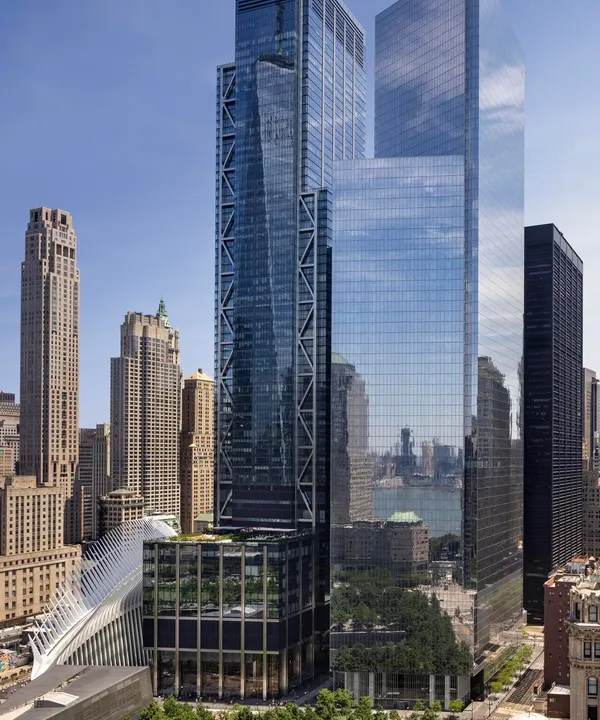
The result was 3 World Trade Center: 80 stories, 1,079 feet, 2.5 million square feet of office space, and a tenant roster that reads like a who's who of the knowledge economy.
Market & Ideal Tenants
Lower Manhattan's transformation in the decade following 9/11 was not accidental. It was the product of deliberate investment in experience infrastructure: the Santiago Calatrava-designed WTC Transportation Hub connecting 12 subway lines, Brookfield Place's waterfront repositioning, Fulton Center's retail activation, and Silverstein's own campus-wide development strategy across 7, 4, and 3 WTC. As of January 2026, Manhattan posted the lowest office vacancy rate of any major U.S. market at 13.1%, with trophy Class A assets averaging $67.36 per square foot.
3 WTC targeted a precise archetype: large-scale, talent-driven organizations in media, technology, finance, and professional services that needed the physical scale to consolidate, the location to compete for talent, and the building quality to signal institutional ambition.
That profile materialized in a tenant roster that validated the thesis: GroupM anchoring 700,000 square feet on a 20-year lease, Uber committing to 300,000 square feet across seven floors, McKinsey & Company at 186,000 square feet, Freshfields Bruckhaus Deringer at 180,000 square feet, Hudson River Trading at 136,000 square feet on the building's top four floors, and Cozen O'Connor, IEX, Diageo, and Casper rounding out a cross-sector community of 13,000+ daily workers.
Closing the Experience Gap
Here's how Silverstein transformed 3 World Trade Center aligned with the REX Methodology pillars.
The building was designed around that principle at every scale. Richard Rogers' signature architectural language — expressed structural steel, K-shaped bracing visible on the exterior, column-free corners with unobstructed sightlines — wasn't aesthetic indulgence. It was a deliberate signal that the tenants inside would not be constrained by the building around them. Column-free floorplates at 2.5 million square feet of total scale gave organizations like GroupM and Uber the ability to design genuinely collaborative environments, not just lease contiguous space.
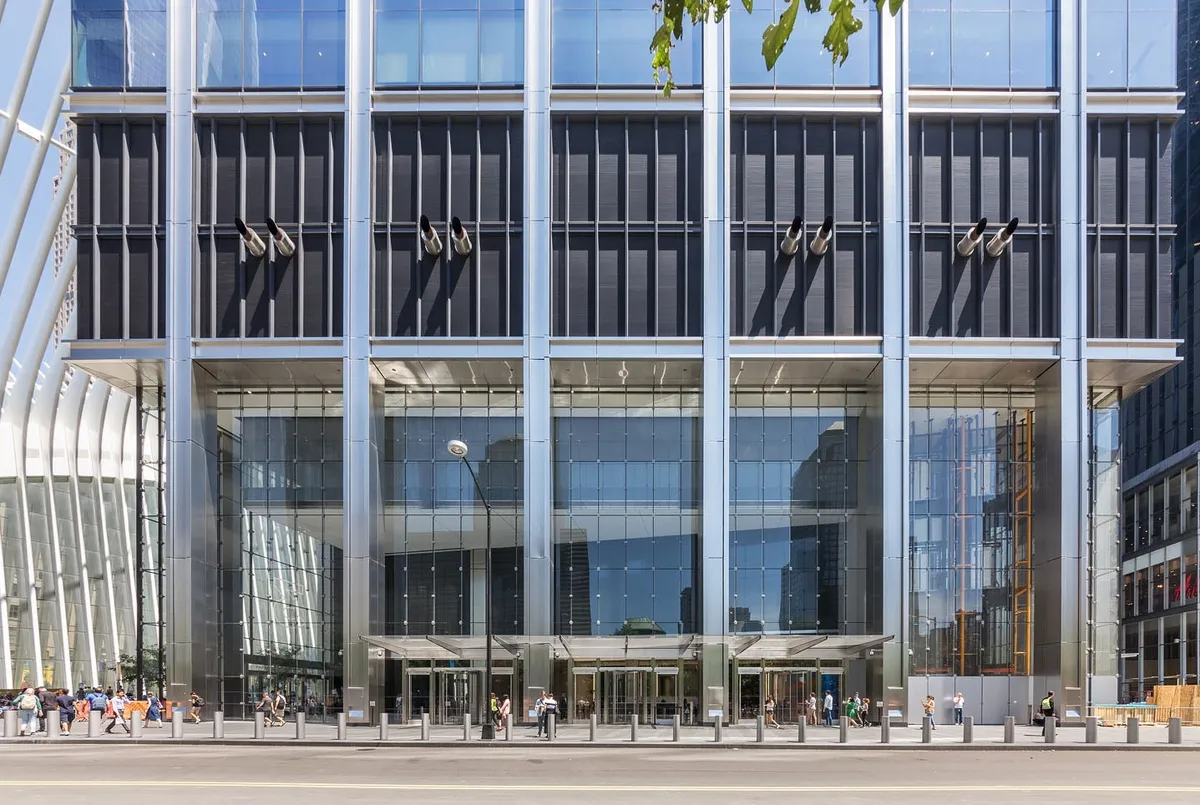
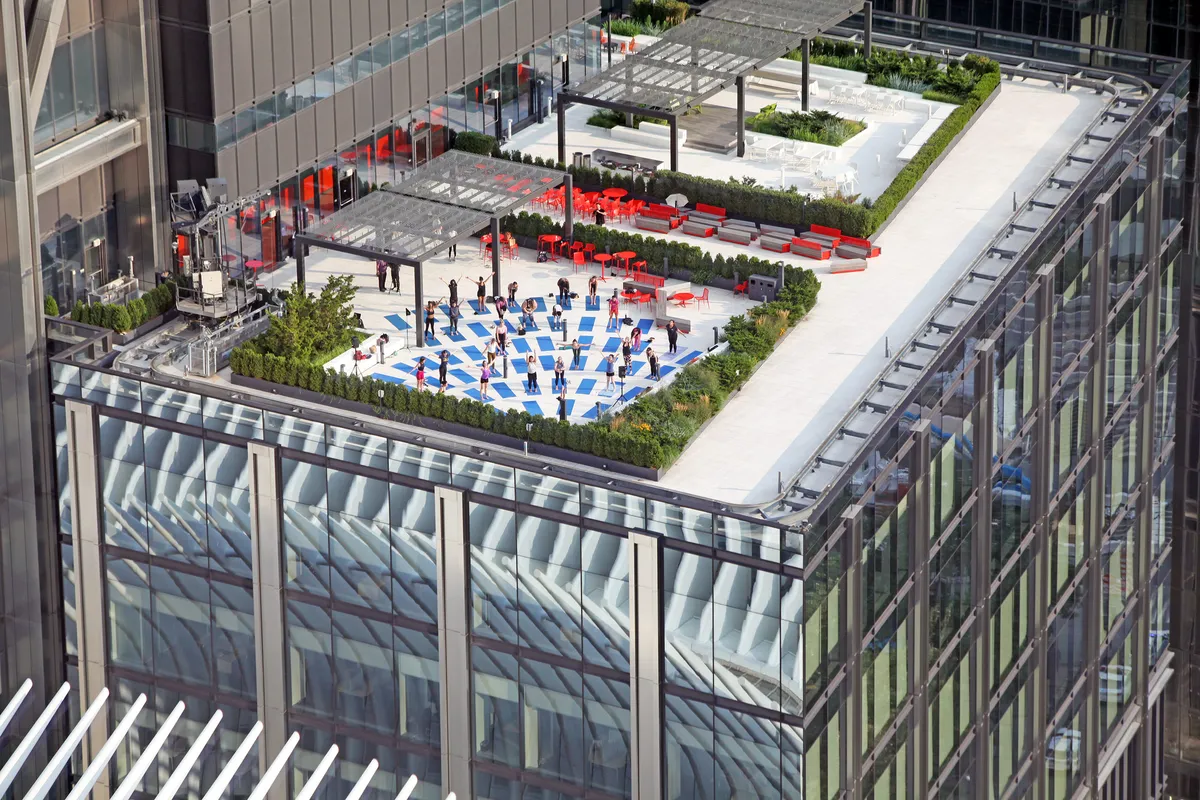
| Spaces & Products | Vacant site on 16-acre WTC campus; Lower Manhattan isolated from city's talent-driven office market; no modern large-floor trophy alternative to Midtown | 2.5M sqft column-free floor plates with floor-to-ceiling glass; three outdoor terraces including NYC's largest office terrace at 5,000 sqft on floor 17; 183,000 sqft of ground-floor retail; direct WTC Transportation Hub connection to 12 subway lines |
| Services | WTC campus underserved on food, retail, and programming; transit connectivity limited; neighborhood perceived as mono-use financial district | Campus-wide F&B and retail activation; Oculus retail destination; cross-building programming for 13,000+ daily workers; hospitality-grade reception infrastructure |
| Systems & Tech | Legacy building systems across surrounding area; no campus-wide digital infrastructure; fragmented tenant experience | LEED Gold systems; 50 elevators purpose-engineered for large-floor tenants; advanced security and access infrastructure; smart building technology throughout; $1.6B tax-exempt bond financing (largest unrated municipal bond deal at the time) |

The Experience Payoff
- 2.5M sqft, 80-story tower at 1,079 feet, opened June 2018 as one of the tallest buildings in NYC and the Western Hemisphere
- $2.8B total development cost; financed through $1.6B in tax-exempt Liberty Bonds, the largest unrated municipal bond transaction at the time of issuance
- GroupM signed a 700,000 sqft, 20-year anchor lease in 2013 before a single floor of office space was complete, unlocking construction financing and validating the thesis at scale
- Uber signed for 300,000+ sqft across seven floors, consolidating NYC operations in a single location
- Tenant roster spans media, technology, finance, law, and professional services: 15+ companies, 13,000+ daily office workers
- Asking rents in the high $80s to low $90s per square foot, commanding a significant premium over Downtown Manhattan's market average
- LEED Gold certification, floor-to-ceiling glass on all four elevations, three outdoor terraces including the largest dedicated office terrace in New York City
- Direct access to 12 subway lines through the WTC Transportation Hub: unmatched transit connectivity in the New York market
Experience Lessons Learned
Anchor tenants set the tone for everything that follows. GroupM's 700,000 sqft commitment in 2013 didn't just provide the financing to complete the tower. It defined the building's identity. Every subsequent tenant chose 3 WTC knowing they would share a campus with one of the world's leading media organizations. Tenant mix is experience architecture.
Transit infrastructure is experience infrastructure. Direct access to 12 subway lines through the WTC Transportation Hub removed friction from the commute before a tenant ever reached the lobby. For organizations consolidating thousands of employees from across the five boroughs, that connectivity was non-negotiable. Buildings that ignore the journey to the door are optimizing for the wrong variable.
Transparency is a talent strategy. Floor-to-ceiling glass on all four elevations and column-free corners aren't design preferences. They are deliberate decisions about how space makes people feel. Organizations competing for knowledge workers understand that the physical environment sends a signal. Light, scale, and openness attract talent in ways that amenity brochures cannot.
Campus thinking multiplies the value of individual assets. 3 WTC does not stand alone. It is part of a 16-acre campus that includes 7 WTC, 4 WTC, the Oculus, Brookfield Place, and the WTC Transportation Hub. Silverstein understood that the value of any single tower compounds when the surrounding ecosystem activates it. Portfolio operators who think asset-by-asset are leaving the most important multiplier on the table.
Scale enables specialization. At 2.5 million square feet, 3 WTC can accommodate the full range of a large organization's space needs: team neighborhoods, executive floors, conference infrastructure, and the outdoor terraces that hybrid-era employees actually use. Smaller buildings cannot offer this. Trophy tenants know the difference.
Ready to Close Your Experience Gap?
The Real Estate Experience (REX) methodology provides frameworks for transforming portfolios through systematic experience delivery. Developed by HqO based on analysis of leading experiential organizations, REX helps asset managers architect spaces, services, and systems that close the gap between tenant expectations and building delivery.
Explore the REX Hub for framework and templates, including Ideal Tenant Profiles, tenant journey mapping, and experience delivery playbooks.
Request a Demo to see how the HqO platform helps portfolios systematize experience delivery at scale.