
AI Is the Office Market’s Best Tenant and Its Biggest Long-Term Problem.
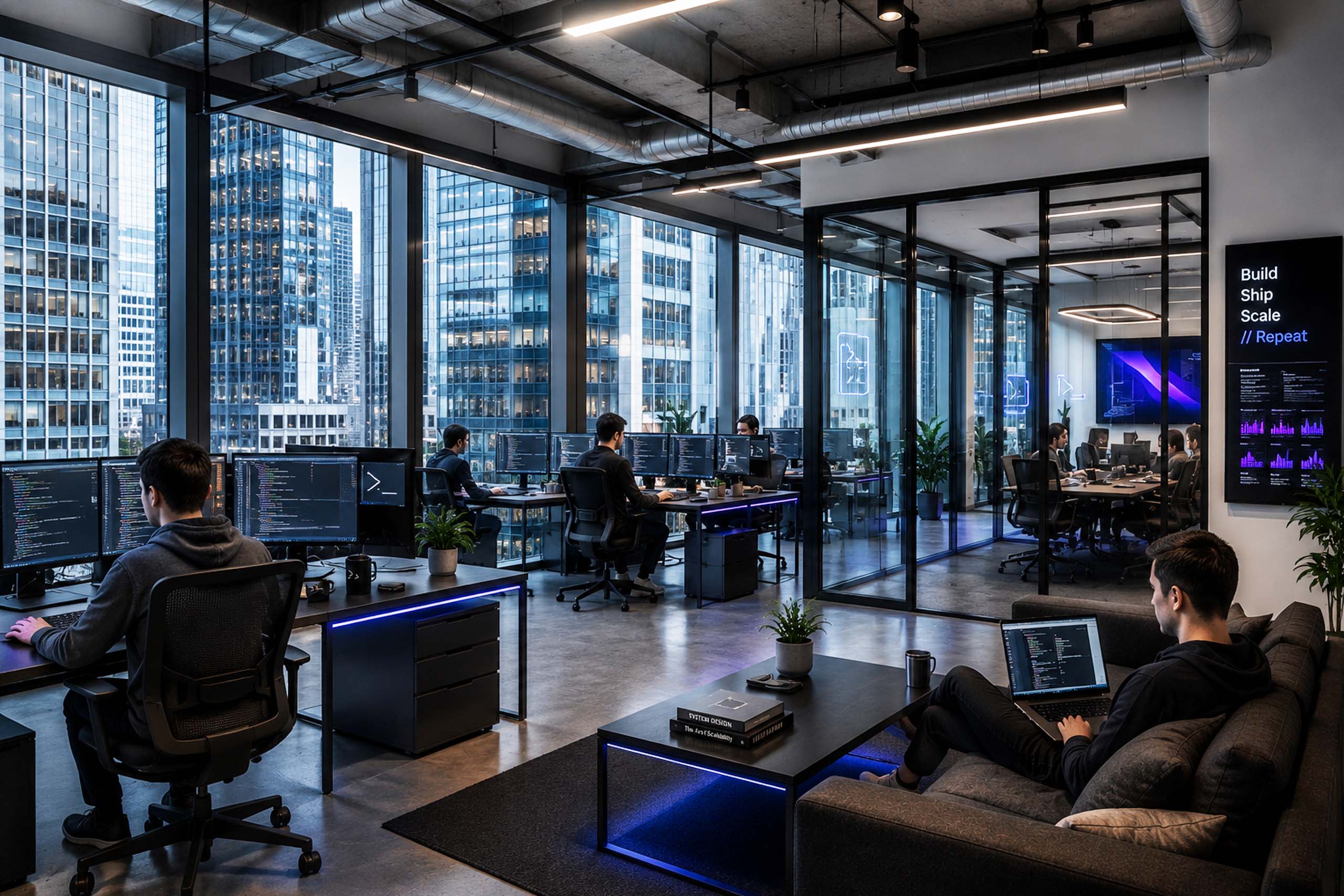

Tech firms leased 11.5 million square feet of office space in Q1 2026. A decade-high 23% of all U.S. leasing activity, according to CBRE. OpenAI and Anthropic each absorbed roughly one million square feet since January. In San Francisco, AI firms accounted for 60% of the entire 2025 total in just one quarter.
The office market has a new power tenant. But the same force driving those leases is also driving the most consequential workforce reset in a generation.
Through the first week of June, Layoffs.fyi had tracked 116,854 tech sector job cuts in 2026 — already more than all of 2025's 104,266. Amazon plans to cut 49,000 desks from its footprint this year, the equivalent of more than 14 million square feet. Ninety-nine percent of the executives and HR leaders in Mercer's Global Talent Trends survey said they expected to cut jobs due to AI in the next two years. Banks are quietly preparing to reshape their workforces with far fewer junior staff.
This is the paradox Bisnow surfaced this week and that I haven't been able to stop thinking about: AI companies are signing trophy leases. And at the same time, every established company implementing AI is doing it by cutting the headcount that filled offices.
What's Actually Happening
The AI leasing surge is real. But it's highly concentrated. Manhattan and the Bay Area are capturing most of it. Outside those markets, the story is a lot quieter.
National office vacancy still hovers around 20%. Moody's put it at 21% in Q1 2026 — a new record high. The best buildings in the tightest markets are filling up. The other 92% of U.S. office buildings aren't seeing any of this.
What our platform data shows is that the divergence isn't random. The buildings pulling ahead share specific traits: collaboration infrastructure that actually works, wellness amenities that drive habitual use, active programming that gives people a reason to show up. In our portfolio, conference rooms and collaboration spaces account for more than 70% of all bookings. Wellness amenities are the highest-volume category by bookings — same users coming back consistently, building a routine around the building rather than around their kitchen table.
Meanwhile, buildings without that infrastructure are seeing engagement slip. Not dramatically. Gradually. The kind of decline that's easy to explain away each quarter until it isn't.
The buildings AI firms are choosing look exactly like the buildings our best-performing tenants have always chosen. That's not a coincidence.
Why It Matters
The K-shaped market that people have been predicting is here. The AI leasing boom is just making it visible faster.
Erin Patterson at Manulife put it plainly: "What we're seeing is a scramble to implement AI at the business level, and that's disrupting the way we see the office recovery. I actually hesitate to call it a recovery just yet."
She's right to hesitate. Record leasing in a handful of markets doesn't fix 20% national vacancy. And AI adoption, even for the companies doing the leasing, is a deflationary force for headcount. Uber capped individual AI tool usage this month at $1,500 per worker to control compute costs. Once the economics shift — and they will — the efficiency gains from AI don't look like more people. They look like fewer.
Leesman's 2026 CRE leadership poll found that 65% of CRE leaders still don't think they've nailed hybrid, even with 56% now running formal attendance mandates. The mandate was the easy call. The experience layer is where most portfolios are still falling short.
The leaders who are most confident they've figured it out? They're in buildings that actually support the work.
What to Do
If you're waiting for an AI tenant to save your building, you're in the wrong queue.
The buildings getting AI firms aren't winning on price. They're winning on product. And the product is experience infrastructure.
Collaboration infrastructure is the highest-value investment you can make right now. It's the dominant use case in the buildings that are winning. If your conference room booking system is clunky, your AV is a friction point, or your meeting room supply doesn't match tenant demand, that's where to start — not the next amenity announcement.
Wellness has moved from differentiator to infrastructure. The buildings with strong gym and wellness booking rates aren't winning because of the gym. They're winning because the gym is proof the building is invested in the people inside it. Habitual use is trust.
The gap between top-performing and declining buildings is widening. Flat aggregate numbers hide it. The operator behaviors that separate them aren't expensive: proactive service, data-informed programming, consistent engagement. Buildings aren't failing dramatically. They're drifting.
AI is going to reshape this market twice. Once on the way in, when it fills the best buildings with the most ambitious companies in the world. And once on the way out, when the efficiency it delivers means every corporate tenant needs less space than they have today.
The buildings that survive both waves aren't the lucky ones that landed an OpenAI lease in 2026. They're the ones that built the experience infrastructure every generation of tenants will pay for.
That's what the data says.
Source: Bisnow, June 8, 2026 — "AI Is Filling Office Towers. It's Also Likely To Empty Them" / CBRE 2026 Tech Gateway Office Markets report / Layoffs.fyi / Mercer Global Talent Trends