
Brooklyn Just Deleted 336,000 Square Feet of Office. It Was the Right Call.
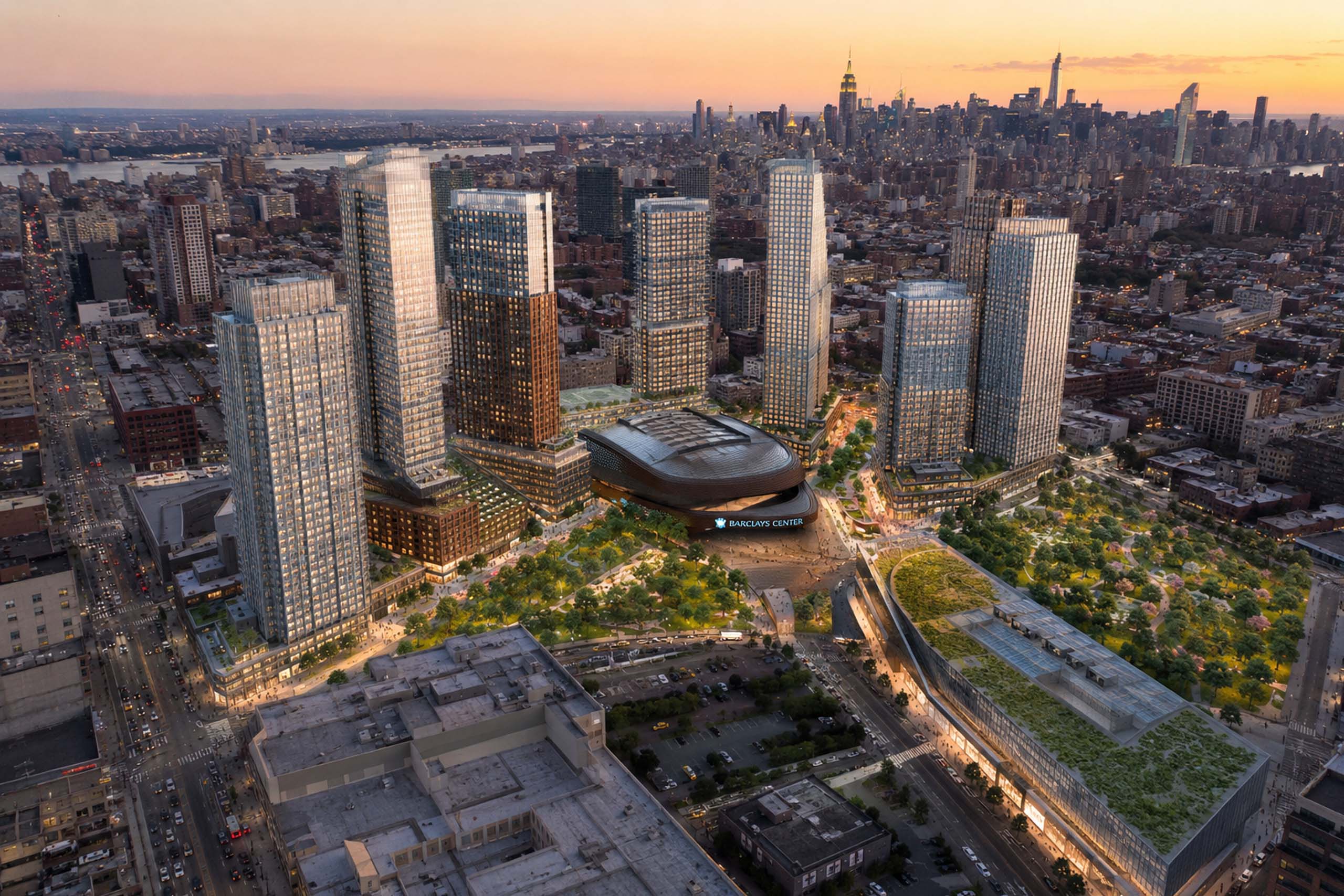

The biggest development in Brooklyn just erased its office component entirely. Cirrus Real Estate Partners and LCOR presented a revised plan for Atlantic Yards Phase II this week: 5,600 apartments across six buildings around Barclays Center, 2,400 more units than the previous plan, and zero of the 336,000 square feet of office that used to be in it. Propmodo covered it in a Fast Take. A $5 billion project, 9.6 million square feet, and not one floor of spec office.
Here's what makes that interesting. New York office is having its best year since the pandemic. Vacancy is tightening, rents are inching up, the big renewals keep coming. And in the middle of that recovery, the developers of one of the most-watched projects in the country looked at office and said no thanks.
Both things are true at once, and the reason they're both true is the whole story.
What's Actually Happening
Demand for office didn't disappear. It got specific. The market stopped paying for square footage labeled "office" and started paying for square footage that does a job.
Our portfolio data shows exactly which jobs. Over the last eight weeks, large conference rooms were the most consistently booked space type we track. Not spiky. Steady. Week after week, within a narrow band, no matter what else moved.
Now look at what moved the other way. Fitness bookings fell by roughly half over those same eight weeks. Recreation and game room bookings dropped about 60%. The passive amenities, the stuff that fills a leasing brochure, kept sliding all quarter (pour one out for the golf simulator).
And one more signal: in the final week of June, event space bookings more than tripled their weekly average. Summer programming season is here, and tenants are showing up for it.
Put those three lines on one chart and you get a clear picture of what office demand actually is in 2026. People book buildings to be with other people. Meetings, events, collaboration. The rest is decoration, and the booking data treats it that way.
Why It Matters
Leesman's survey of senior CRE leaders found 70% keep office space for one primary reason: collaboration and knowledge exchange. Not desks. Not perks. The chance to put people in a room together. The behavioral data and the leadership survey agree, which doesn't happen often in this industry.
That's why the Atlantic Yards decision isn't a bearish signal on office. It's underwriting catching up to behavior. Office used to be a default allocation in every master plan, the same way every building got a gym in 2019. Those days are done. Office is now a use that has to defend its square footage like everything else, and 336,000 speculative feet next to an arena couldn't make the case.
The developers didn't kill office. They declined to build office nobody would have booked.
What to Do
If you're planning a project, stop allocating office by habit. Underwrite it the way the booking data would: what specific demand does this space serve, and would anyone reserve it on a Tuesday?
If you operate existing office, your building already runs this experiment every week. Read the results. The spaces that get booked out are telling you where to invest. The spaces sitting empty are telling you what to convert. A gym at half its spring usage is not an amenity. It's a floor plate waiting for a better idea.
The projects getting built in 2026 are the ones honest about what people show up for. Atlantic Yards just showed everyone what that honesty looks like at $5 billion scale.
Build what people book. Cut the rest.