
The REX Effect: How Brookfield Repositioned 660 Fifth Avenue Into Manhattan’s Premier Class A Destination

How Brookfield Properties turned a troubled Midtown tower into a fully-leased trophy asset, commanding $135 per sqft, by executing mid-pandemic when competitors froze.
Vision
Most landlords looked at 666 Fifth Avenue and saw distressed debt. Brookfield Properties looked at it and saw Manhattan's future.
In 2018, when Brookfield acquired the 99-year lease on the troubled Midtown tower for $1.3 billion from Kushner Companies, the building was synonymous with financial strain and political controversy. The 39-story, 1.25 million sqft. property was saddled with vacancy, outdated infrastructure, and a reputation that made leasing nearly impossible.
Today, 660 Fifth Avenue commands rents averaging $135 per square foot, among the highest in the United States. The building is fully leased to blue-chip tenants including Citadel, Macquarie, Scotiabank, and Viking Global. Brookfield's $400 million renovation didn't just reposition an asset. It redefined what's possible when experience infrastructure meets strategic execution.
Brookfield didn't acquire a building. They acquired a bet on Manhattan's recovery.
Ben Brown, Brookfield's co-president of real estate, framed the $1.7 billion total investment around a provocative thesis: "We always thought that in the fullness of time we were going to be proven right."
The timing was intentional, not opportunistic. Brookfield recognized that Manhattan's office market was splitting: trophy assets would thrive while secondary properties struggled. The question wasn't whether to invest, but whether they could execute transformation before market recovery arrived.
The Market Analysis: Flight to Quality Accelerates
Brookfield's 2018 acquisition coincided with fundamental shifts reshaping Manhattan's office landscape. The renovation launched in 2020 when conventional wisdom said office was finished.
Brookfield saw three converging forces conventional analysis missed:
The trophy scarcity dynamic. Manhattan's Midtown trophy assets saw direct availability drop to 3.7% by late 2025, according to Newmark. Trophy assets captured 55% of leasing activity despite representing only 27% of inventory, Avison Young reported, the highest share on record. Premium space was becoming genuinely scarce.
The supply constraint advantage. Less than 1 million sqft. of new office space is expected for delivery between 2026 and 2027, the slowest pace since CoStar began tracking. New development economics collapsed. Buildings like 660 Fifth Avenue delivering trophy-quality space through repositioning had structural advantages over ground-up construction.
The flight to experience. Class A+ buildings were achieving 85% mid-week office attendance while overall Manhattan hovered at 72-75%. Tenants were consolidating into buildings delivering measurable experience advantages: better infrastructure, sustainable operations, hospitality-grade amenities.
Brookfield bet that one transformational project could capture disproportionate demand in a supply-constrained, quality-starved market. They were right.
Closing the Experience Gap
Most repositioning projects renovate surfaces. Brookfield rebuilt infrastructure.
Places: Architecture as Competitive Moat
Kohn Pedersen Fox's design philosophy: demolish everything except what matters. The building was stripped to its steel frame. Everything else—facade, lobby, mechanical systems, elevators—was reimagined.
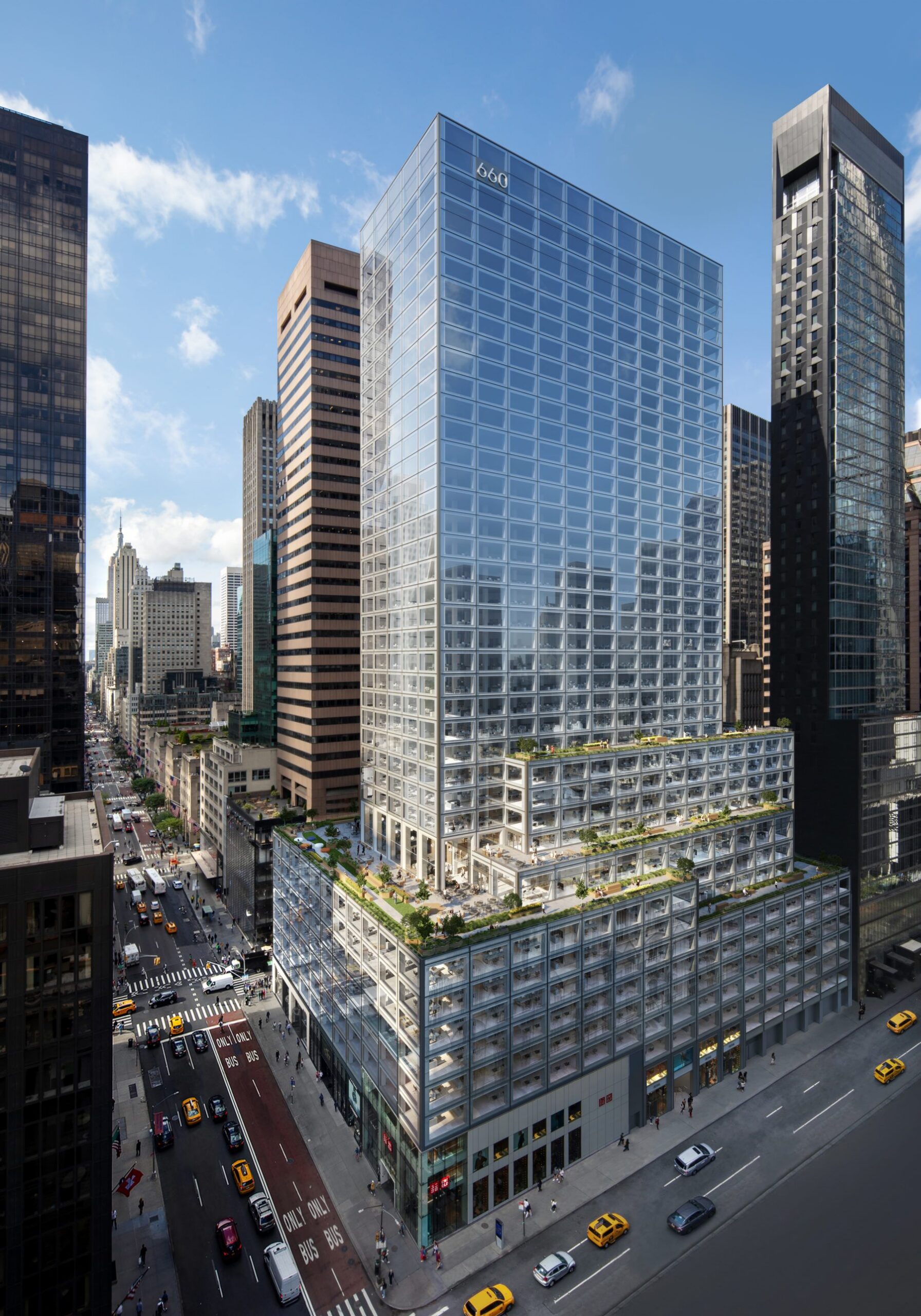
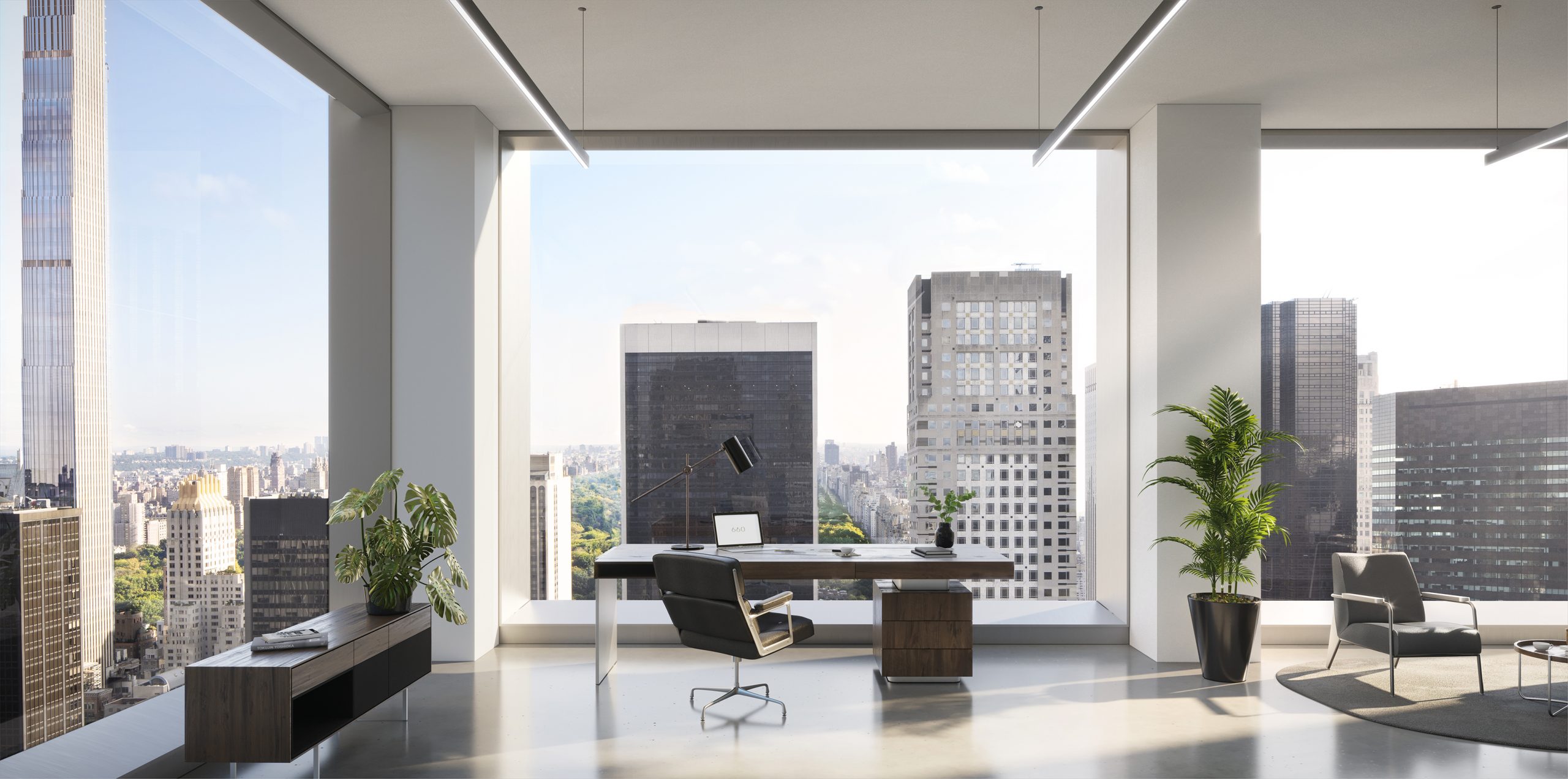
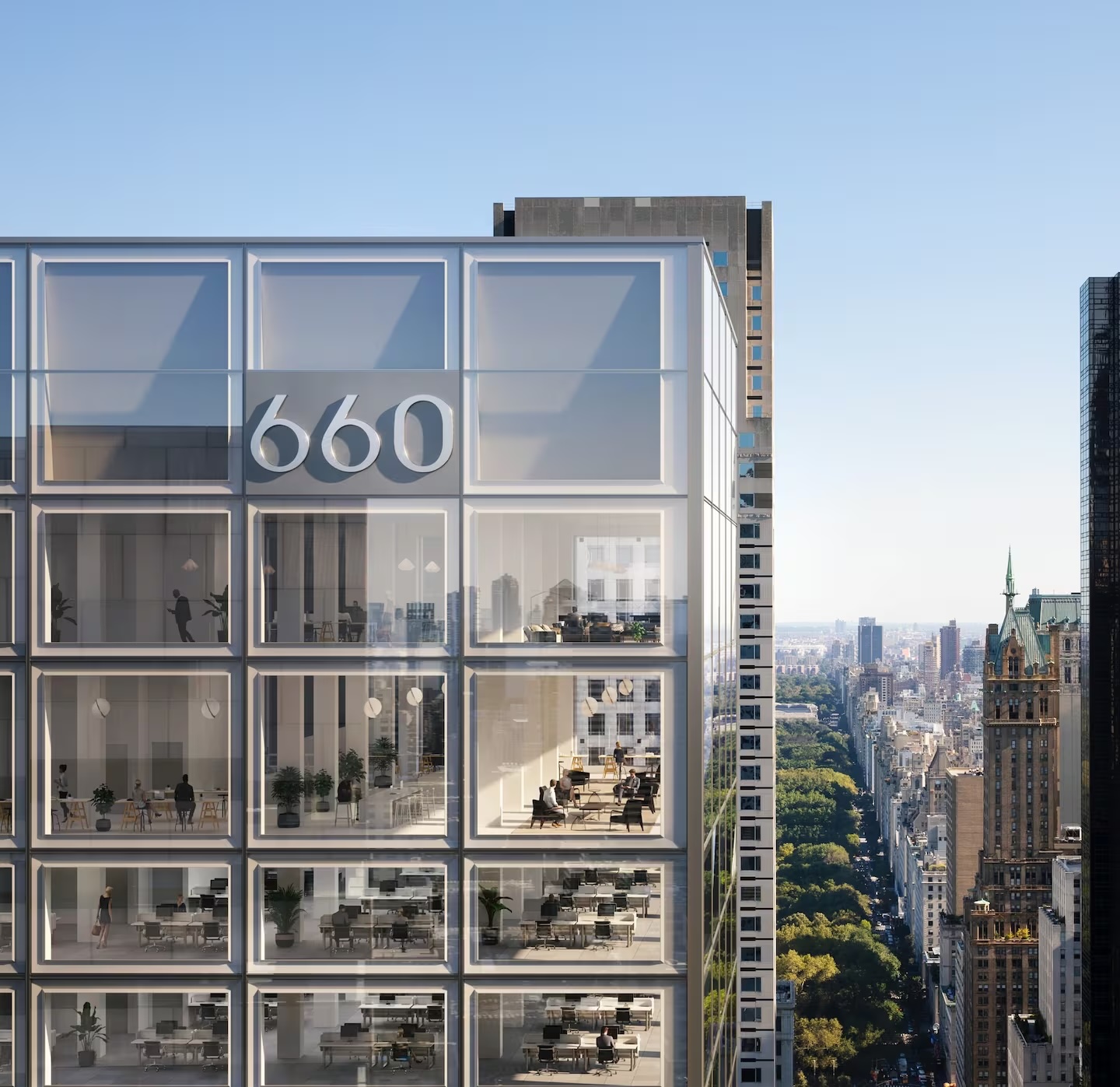
The new curtain wall replaced uninsulated 1950s aluminum panels with floor-to-ceiling glass measuring 11 feet tall by 19 feet wide. According to Brookfield, these are the largest single-pane unitized windows in North America. The panels contain integrated insulation and maximize natural light while tripling window space compared to the original design.
This wasn't aesthetic preference. It was operational advantage. The porous original facade allowed wind infiltration. Tenants felt drafts. Energy costs were unsustainable. The new system reduced carbon emissions by 50% while delivering the bright, light-filled spaces premium tenants demand.
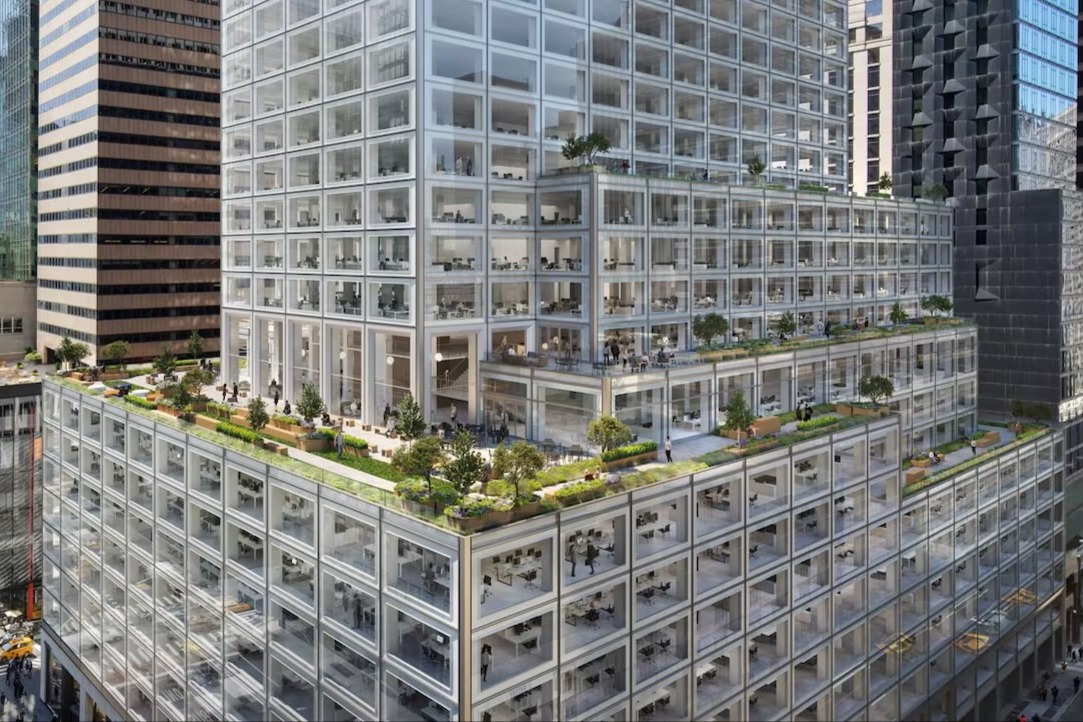
Four outdoor terraces totaling 40,000 SF were carved from the building's setbacks on the 8th, 10th, 11th, and 15th floors. Original spotlights called the "Tower of Light" became usable amenity space. The building's wedding-cake silhouette, once just architecture, became differentiated experience infrastructure.
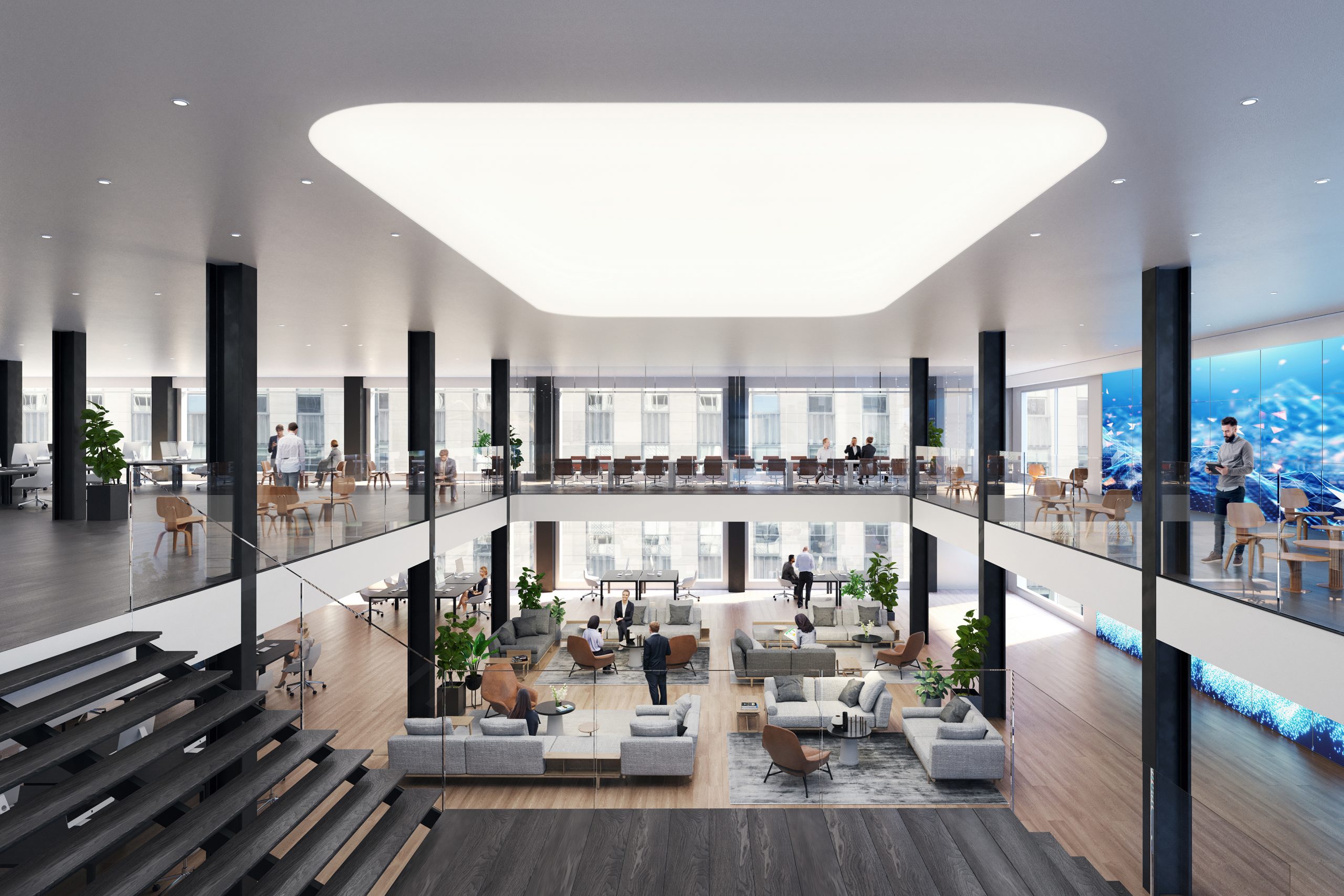
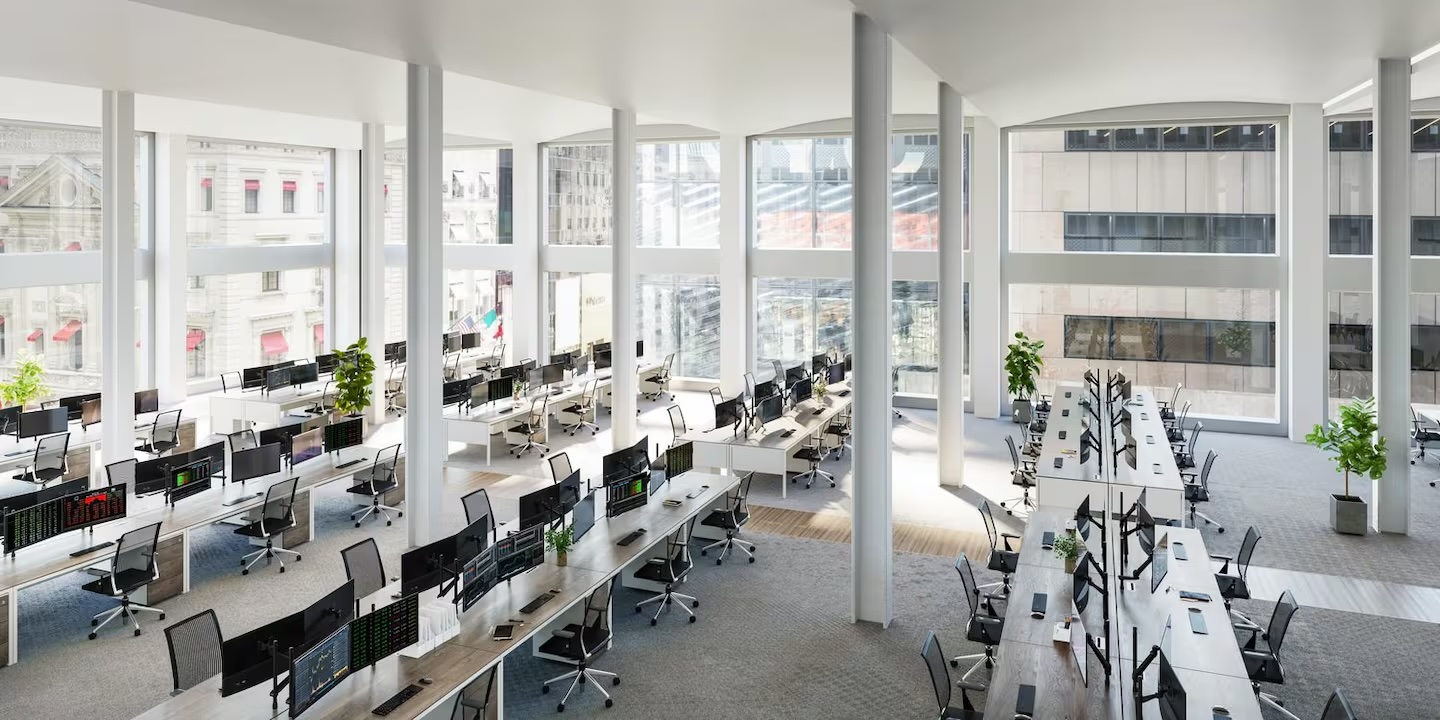
Inside, columns were removed to create flexible, open floorplates. Ceilings were raised. Sightlines were optimized. The result: 1.25 million SF of Class A space competing directly with new construction at half the delivery timeline.
Services: Hospitality Operations Meet Financial Services Standards
Brookfield made a decisive operational shift: the building wouldn't just house premium tenants. It would operate like premium hospitality.
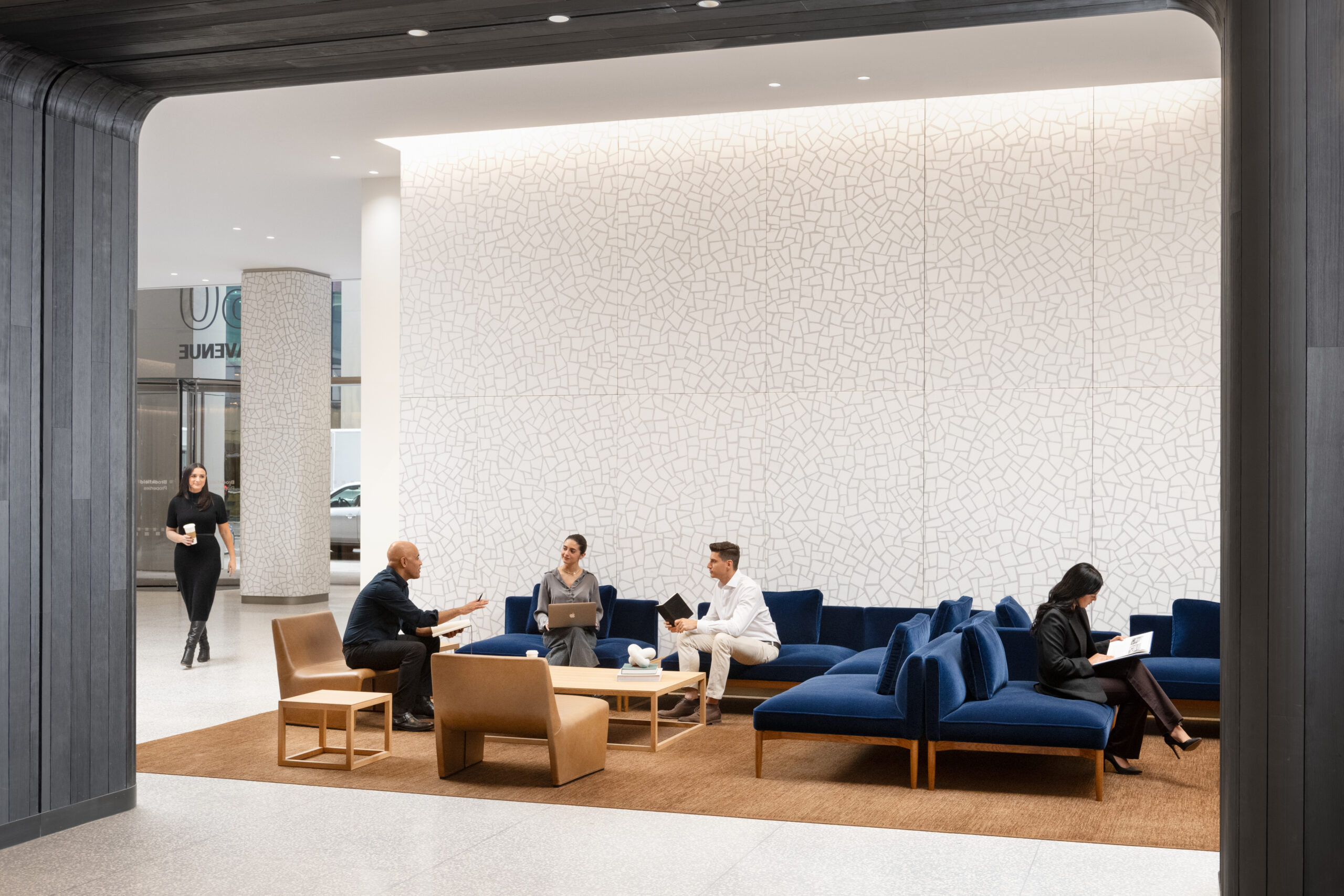
The lobby was completely reconstructed with white terrazzo floors, Japanese burned wood paneling, and concierge staff using iPads instead of traditional reception desks. This signaled that 660 Fifth Avenue wasn't an office building with a lobby. It was a service-driven environment where tenant experience began at entry.
Elevators were upgraded with destination dispatch systems reducing wait times. Mechanical systems were modernized with 100% renewable energy from Brookfield Renewable's hydropower plants, achieving LEED Gold certification. These weren't sustainability talking points. They were tenant recruitment advantages in a market where ESG commitments influence occupancy decisions.
The building was rebranded from 666 Fifth Avenue to 660 Fifth Avenue in 2021, shedding controversial associations and signaling total transformation. The address change communicated what the renovation delivered: a completely new asset.
Systems: Leasing Velocity Through Integrated Intelligence
Brookfield's portfolio-scale advantage: integrated capital, operations, and leasing expertise operating from unified intelligence infrastructure.
The renovation was designed around tenant requirements gathered from Brookfield's existing relationships with financial services and institutional tenants. Floor sizes, ceiling heights, infrastructure capacity—all calibrated to specific use cases before construction began.
Leasing began before renovation completed. Macquarie signed a 250,000 SF lease in 2022 as the building's first post-renovation commitment, establishing market confidence. Citadel followed with 504,000 SF across 20 floors. Viking Global took 100,000 SF. Scotiabank signed on as anchor. Each lease validated the repositioning thesis and attracted the next commitment.
This wasn't sequential leasing. It was momentum marketing. The building's leasing velocity created scarcity perception: if these tenants signed, the remaining space must be premium. Fully stabilized by 2024, 660 Fifth Avenue achieved complete lease-up in a market where average availability remained above 15%.

The Experience Payoff: Trophy Status Restored
660 Fifth Avenue's success metrics exceed typical repositioning outcomes.
Building-Level Outcomes
- Fully leased to blue-chip financial services and institutional tenants
- Rents averaging $135 per sqft., among the highest in the United States
- LEED Gold certification with 50% carbon emission reduction
- 100% renewable energy operations via Brookfield Renewable integration
- $1.3 billion refinancing completed in 2025, reflecting full stabilization and market confidence
Portfolio Impact
Brookfield's 660 Fifth Avenue success validated their broader repositioning strategy across distressed Midtown assets. The playbook works: acquire troubled properties with strong bones, invest in experience infrastructure, execute hospitality-grade operations, deliver measurable sustainability outcomes.
Market Validation
The repositioning contributed to broader Midtown trophy tightening. When premium space performs this well, it signals to the market that quality commands pricing power regardless of overall vacancy rates. Trophy Class A rents in Midtown climbed toward $120-125 per square foot, according to Metro Manhattan, while secondary properties languished.
This is the REX Effect at asset scale: one experience-led transformation resetting market expectations for an entire quality tier.
Voices of the Experience
"We always thought that in the fullness of time we were going to be proven right. We completed our lease-up after a significant transformation, restoring 660 Fifth into one of New York's premier office assets."
– Ben Brown, Co-President of Real Estate, Brookfield Properties
Experience Lessons Learned
Timing beats hesitation.
Brookfield launched a $400 million renovation mid-pandemic when competitors froze. They recognized that market dislocation creates transformation windows. By the time recovery arrived, 660 Fifth Avenue was already leased.
Infrastructure investment compounds.
Stripping to steel and rebuilding mechanical systems, facades, and elevators wasn't cost minimization. It was competitive moat creation. Tenants choose buildings where infrastructure doesn't constrain operations.
Experience platforms beat amenity budgets.
The outdoor terraces, concierge service, renewable energy operations—these aren't add-ons. They're integrated experience infrastructure differentiating 660 Fifth Avenue from new construction competitors charging similar rents.
Reputation reset requires totality.
Rebranding from 666 to 660 Fifth Avenue worked because the transformation was comprehensive. You can't rebrand without rebuilding. The address change signaled that nothing from the troubled past remained.
Quality concentration creates pricing power.
Brookfield didn't target broad market appeal. They designed for financial services and institutional tenants requiring specific infrastructure, sustainability credentials, and operational standards. Precision targeting beats generic positioning.
The Competitive Advantage
660 Fifth Avenue represents what happens when landlords treat repositioning as experience transformation, not capital project management.
Brookfield didn't just fix a distressed asset. They built the template for capturing disproportionate value in bifurcated markets: comprehensive infrastructure investment, hospitality operations, sustainability integration, and leasing velocity that creates momentum.
For asset managers evaluating repositioning opportunities, the question isn't whether to invest in experience infrastructure. It's whether you can execute transformation at Brookfield's scale and speed while competitors debate whether recovery has arrived.
The Manhattan market rewards landlords who understand this. 660 Fifth Avenue's full lease-up in a 15% overall availability market is proof.
Ready to Close Your Experience Gap?
660 Fifth Avenue's transformation demonstrates how systematized experience delivery turns distressed assets into trophy destinations. HqO's Real Estate Experience (REX) Platform provides the frameworks, tools, and intelligence to execute repositioning strategies that command premium outcomes.
Request a Demo to see how HqO's Intelligence Suite, Operations Suite, and Tenant Suite power experience-led transformation.