
Extend And Pretend Is Ending. The Buildings That Survive Won’t Be The Ones The Lenders Saved.

Propmodo ran a piece this week called "The End of Extend and Pretend." It's the cleanest framing I've seen on what's about to happen.
MSCI says distressed CRE debt is now above $130 billion. Office CMBS delinquency cleared 12% earlier this year. That's worse than 2009. Over $100 billion in CMBS loans mature in 2026, and more than half are expected to default. Investors bought 204 distressed office buildings last year, up from 133 the year before. In just the first two months of 2026, distressed office sales hit $808 million. Up 24.5% from the same window in 2025.
The lenders are done pretending.
For three years the play was the same. Loan comes due. Borrower can't refinance. Lender extends. Everyone hopes a few more quarters of "Class A trickle-down" save the Class B building. Now the extensions are running out and the equity isn't coming back. The buildings that were being kept alive on paper are coming to market.
Here's where it gets interesting.
The narrative on this has been about basis. Buildings re-price, new owners pick them up cheap, the market clears. That's true, but it skips the question that actually matters. Of the 30% of US office stock that's functionally obsolete, why are some buildings filling up while the ones next door empty out?
We see the answer in our portfolio every week. Look at the last 30 days of door unlocks across HqO's buildings. A trophy Midtown Manhattan tower is up 15% over the prior 30 days on a base of around 2,200 daily unlocks. A converted civic building in Chicago is up 10% on a base near 11,000 daily unlocks. A glass tower in Vancouver is up 27%. A Calgary office is up 36%. The momentum is concentrated.
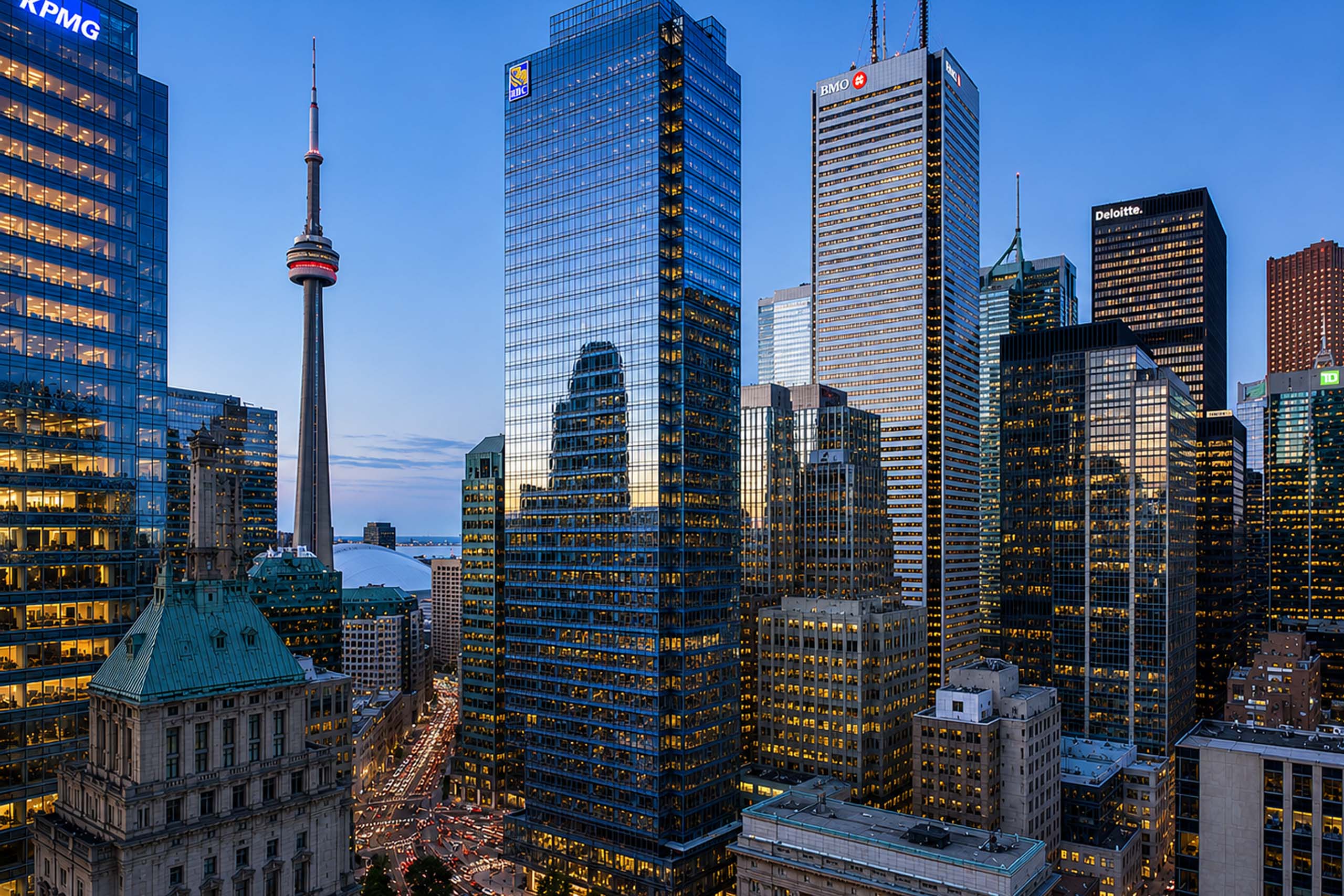
On the other side of the same portfolio, in the same 30 days, a Toronto financial district tower is down 39%. Another Toronto bank tower is down 29%. A downtown Los Angeles office is down 26%. A Chicago Magnificent Mile tower is down 20%. An Arlington office is down 30%.
These are not different markets. Some of these buildings are in the same five-block radius. The divergence isn't about geography. It's about whether the building works as a place to be.
That's also what shows up in the booking mix. Outdoor space bookings across our portfolio are up 84% over the prior 30 days. Common areas up 100%. Event space up 39%. Classrooms up 51%. Lounges up 20%. Kitchens up 59%. The buildings tenants are choosing aren't the ones with the best fitness center. They're the ones where there's somewhere to gather. Where the lobby is alive. Where the outdoor space isn't an afterthought.
The distressed assets coming to market this year are mostly the inverse. Commodity space, reactive operations, amenity packages designed for 2014. The lenders bought them another 24 months. The tenants told the truth in the badge data.
So what does extend and pretend actually end with?
A sorting mechanism. buildings that get refinanced cleanly will be the ones that can show the experience data underneath the rent roll. The buildings that don't will get sold at 40 to 60 cents on the dollar to operators who think they can fix them. Some of those operators will. Most won't. The ones who will are the ones treating the asset as a system, not a project. New lobbies and a tenant lounge don't move the number if nobody shows up in month two.
Underwriting in 2026 is about to look very different than underwriting in 2021. The basis matters. The capex matters. But the question that decides whether a deal pencils is no longer "is this Class A or Class B." It's "do tenants come here on Friday."
That data exists. It's measurable. It's directional. And for the first time, it's the thing the lenders should be looking at before extending the next loan.
The bleeding has stopped. The sorting just started.